As we start to prepare to move into 2026.
I’ve been reading a lot of 2026 investment outlooks.
And sure most of these outlooks are great and all, but many times they amount to the investment firm “talking their own book”, or making predictions that are just downright inaccurate.
So instead of writing on how I think 2026 will play out.
I wanted to approach it from a different angle.
I wanted to ask what are the 3 big questions to think about in 2026 – and how the answer will impact investing.
And of course while I will share my own views, I could well be wrong – so feel free to disagree with me.
3 big questions to ask – to determine asset allocation in 2026?
These are the 3 (with 1 bonus) big questions that I see (and the implications for investing):
- Will the AI cycle continue? – Determines how much to allocate to AI
- Does US outperformance continue? – Determines how much to allocate to US
- Where do long term interest rates go from here? – Determines how much to allocate to Bonds / REITs / Cash
- Does Trump continue to run a huge fiscal deficit? How to hedge money printing? – Determines overall asset allocation
Will the AI cycle continue? – Determines how much to allocate to AI
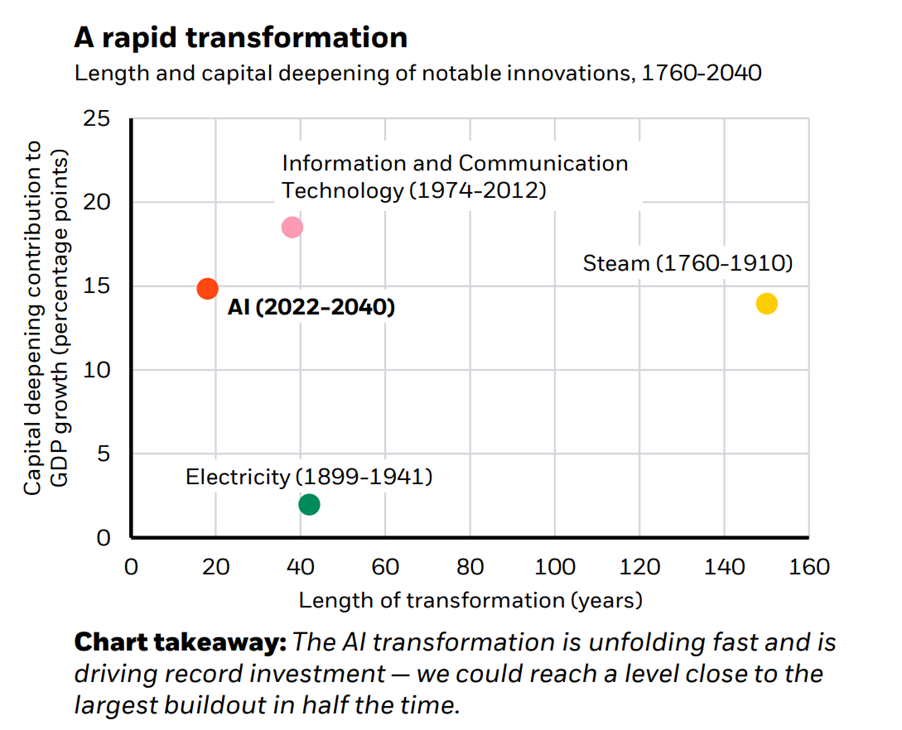
There’s a great chart from Blackrock below.
That shows that the AI build out cycle – is likely to be the fastest revolution of all the prior revolutions, and yet with level of investments no smaller than the steam or IT revolutions.
In other words – that’s a huge amount of investment to be deployed, in a very short amount of time.
And you don’t need me to tell you that this has led to amazing growth in the AI beneficiaries.
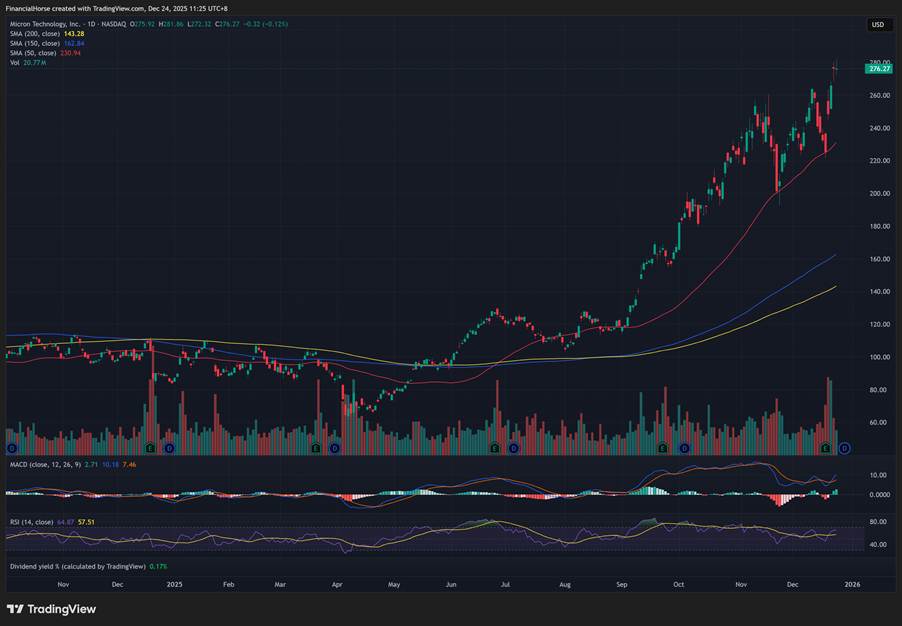
The big question for 2026 – does this continue, and who are the key beneficiaries?
This is an FH Premium article I am releasing for all readers. If you enjoy articles like this, do support Financial Horse on FH premium and get access to premium articles like this, including my stock watch.
My view?
My simple view.
I think the AI cycle continues to play out in 2026.
But with significant dispersion across industries and single stocks.
What do I mean by this?
NVIDIA is well known as the poster boy for the AI revolution.
Yet if you bought NVIDIA in August 2025, you would have pretty much been flat for the next 4 months.
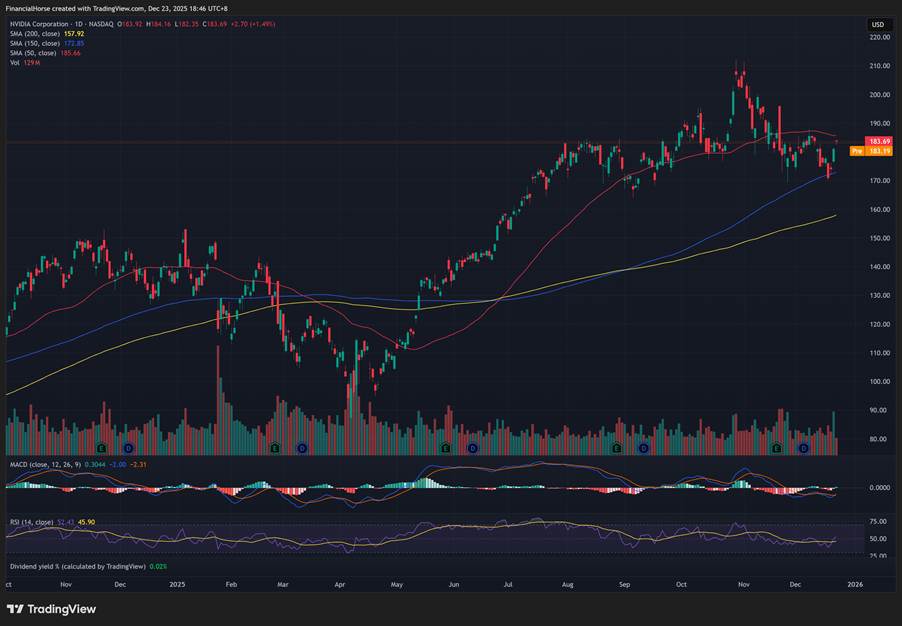
While other stocks like Google have soared >50% during the same time period:
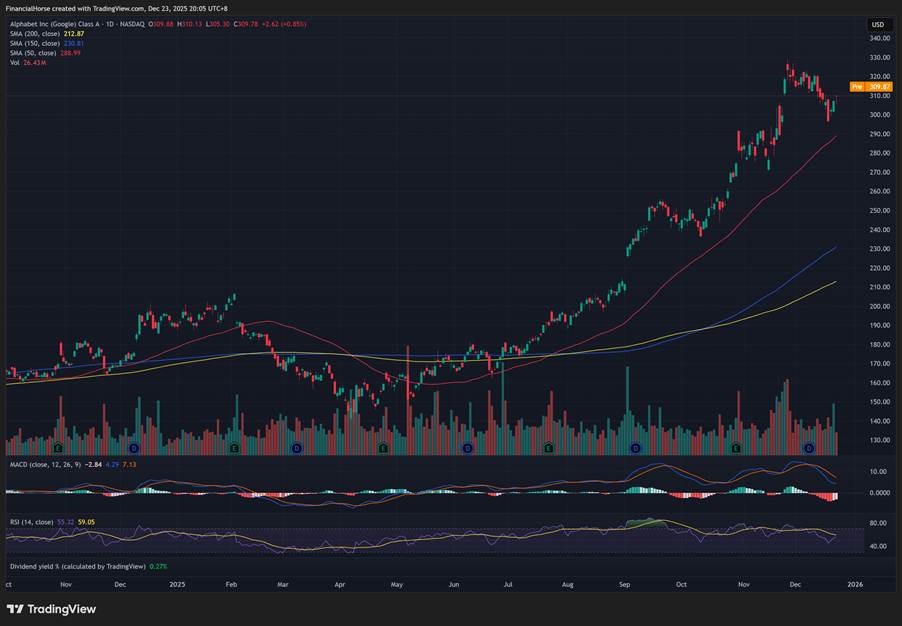
I think that will continue to play out in 2026.
Stocks that benefit from AI – and where it has not already been priced in.
Will outperform those where it has already been priced in by the market.
Which means if you want to benefit from AI in 2026, a more active stock picking approach may be required.
But if you get it right, I think AI continues to perform well.
This technology is just too disruptive, and a huge amount of capital will continue to pour into this space.
Does US outperformance continue? – Determines how much to allocate to US
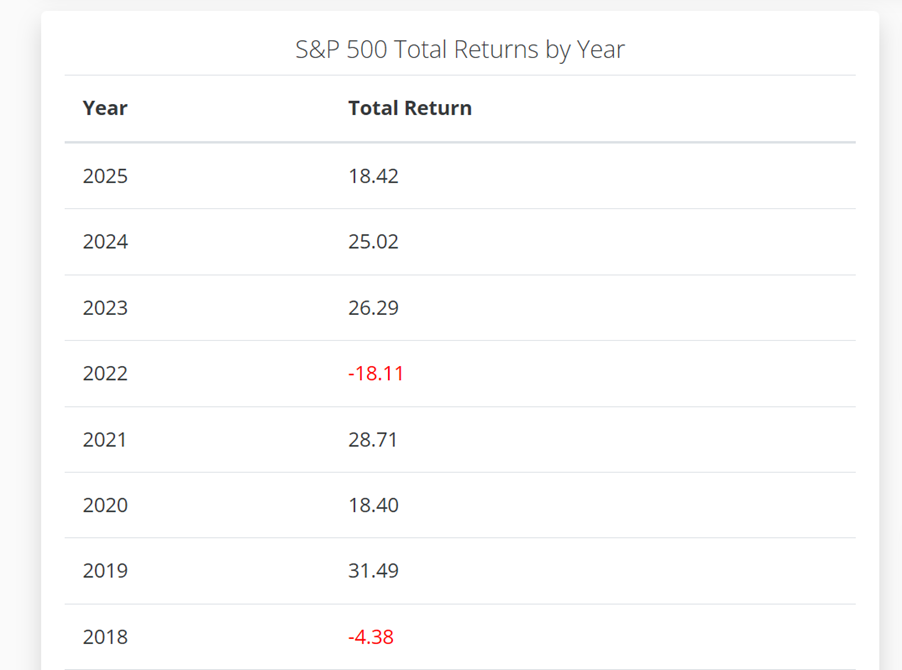
In the past 8 years.
With the exception of 2022 and 2018.
The S&P500 has delivered double digit returns every year:
Because of that, we are at a point where almost all large institutional investors are overweight the US – or risk underperformance.
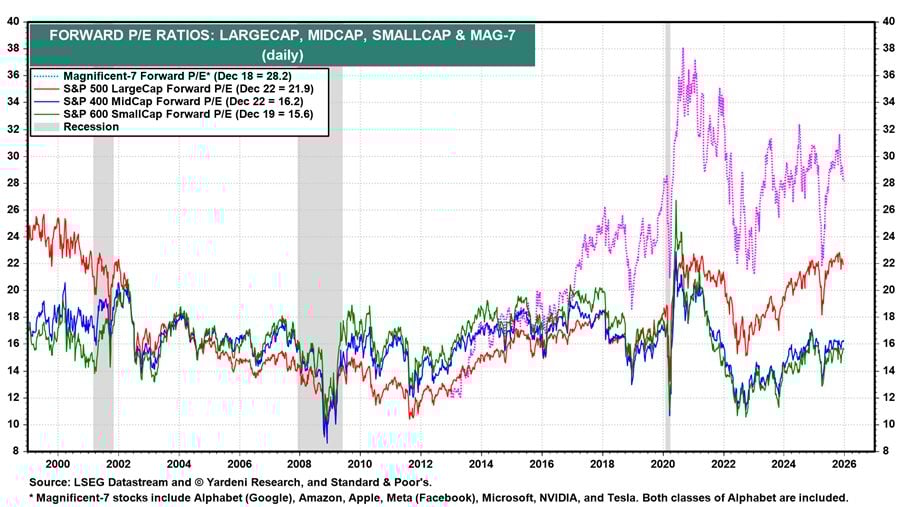
And this has also driven S&P500 valuations to a record 21.9x forward P/E.
The same valuations last seen in early 2022, and early 2025 – both of which were preceded by large market sell-offs.
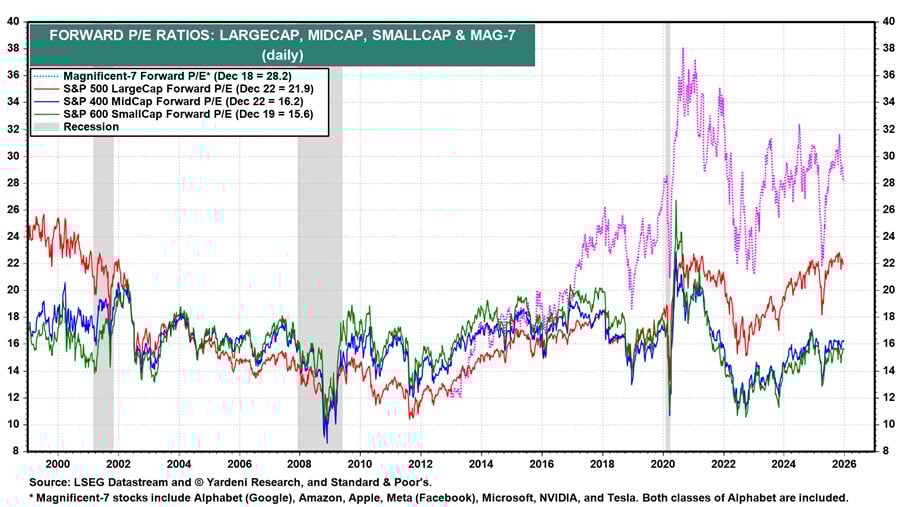
The big question in 2026.
Does the US stock market continue to outperform?
And should investors still overweight the US?
My view?
On this one, I have much less confidence on the answer.
Gun to my head, I think US stocks continue to perform well, but because valuations today are so high, I don’t think they outperform global stocks to the same extent anymore.
But like I said, this is not an answer I have a great deal of confidence on.
What I do have more confidence on, is that I think the US economy continues to generate some of the most dynamic and cutting edge companies in the world.
And if you leave aside the index as a whole and pick single stocks.
I think there is plenty of room for outperformance there.
The index as a whole is expensive, but within single stocks I see a lot of great names that trade at fair value.
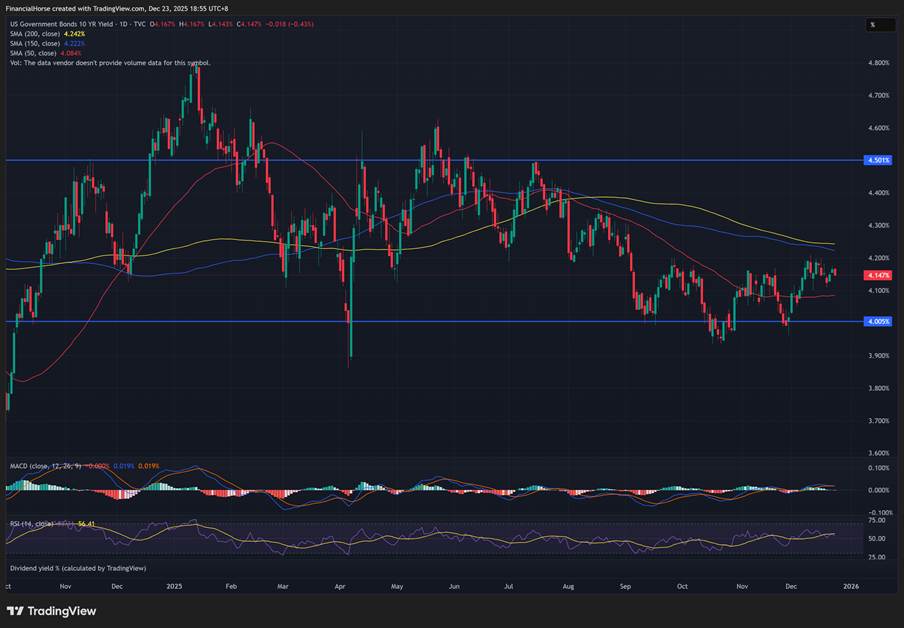
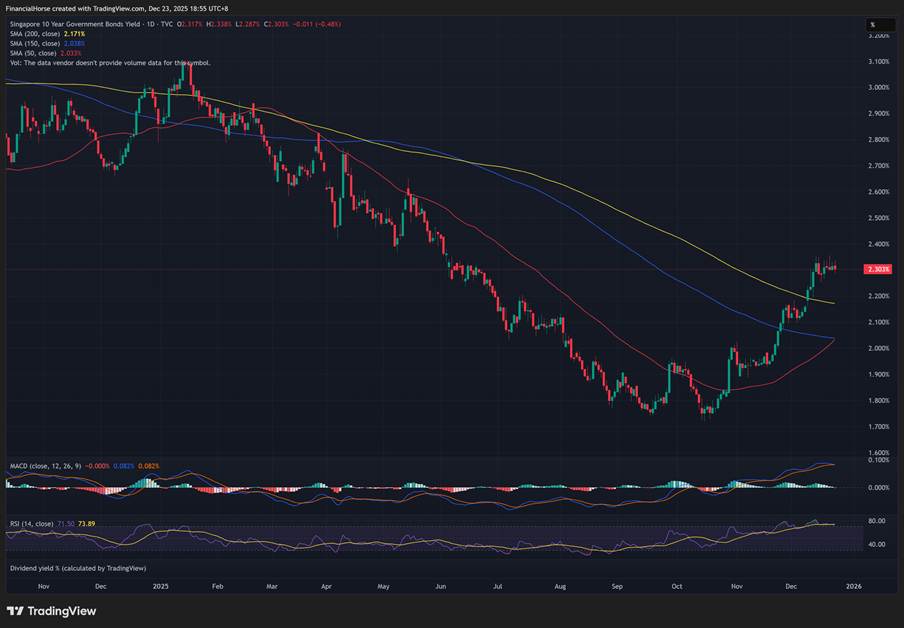
Where do long term interest rates go from here? – – Determines how much to allocate to Bonds / REITs / Cash
Does Trump continue to run a huge fiscal deficit? How to hedge money printing? – Determines overall asset allocation
I cheated slightly on the last question, by including a bonus fourth question.
But the more I thought about it, the more I realised they may actually be the same question.
What I want to know – is whether Trump continues to run a huge fiscal deficit.
Does the Federal reserve continue to cut interest rates, and keep monetary policy easy.
In other words, does the US continue to “print money”.
And do long term interest rates go higher from here?
The reason why this matters, is that is determines asset allocation.
How much do you allocate to interest rates sensitive sectors like bonds, REITs, cash etc.
Vs hedges to money printing like Bitcoin, Stocks, gold etc.
Never miss a post! Follow Financial Horse by subscribing or following us on your favorite platform:
Subscribe to our mailing list for exclusive content straight to your inbox:
My view?
I think under Trump, the US continues to run a large fiscal deficit in 2026.
And when Jerome Powell’s term is up in 2026, Trump picks someone who gives him what he wants.
Low interest rates / easy monetary policy, at a time when the US runs a large fiscal deficit.
Assuming that the US avoids a recession in 2026.
That large fiscal deficit + easy monetary policy in 2026 is basically just money printing.
And in my view, that is part of the reason why you see hedges to money printing like gold soaring to all time highs.

The risk?
If so – why not just go out and buy a ton of gold and Bitcoin and stocks?
Well, the fact that Bitcoin is down 30% from highs should tell you that it’s not so simple.
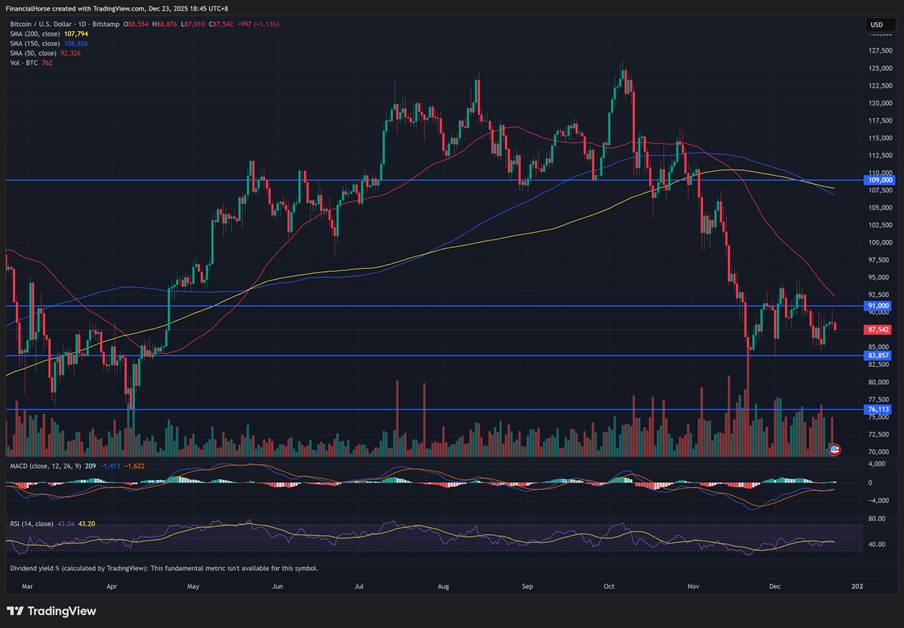
I think the problem today is that investors are very fully invested in risk assets today.
At a time when valuations are not cheap.
In a climate like that, even if the mid term path is for higher prices.
All it takes is a small wobble in AI earnings, or Trump policy, or geopolitical tension.
And you could easily see a 10-20% sell-off in markets.
That’s the risk that I see.
And sure you may say that you’re a long term investor and all.
But a $1 million portfolio sitting on a 20% drawdown is $200,000 in paper losses.
That’s something you think you can stomach, until you’re actually experiencing those losses for yourself.
Implications for investing in 2026 (if I am right)?
What does this mean for investing in 2026?
Like I said, I could well be wrong on the 3 questions above, so you’re more than welcome to disagree with me.
But as an investor, I need to have a view, as that determines how I invest.
And then I change my mind as 2026 plays out, depending on what I see.
That’s just how investing works.
If I’m right on the above.
That means I want to continue to:
Overweight the US, but being careful with valuations, and picking single stocks with attractive risk-reward.
Continue to run decent allocation to AI beneficiaries, but being very careful on which names to own.
And underweight REITs or long term bonds, while owning money printing hedges like gold, stocks, bitcoin.
And of course, being cautious of a broad market selloff at these valuations, so having enough dry powder to capitalise if we get a sell-off.
Agree, or disagree with me?
Love to hear what you think!
This is an FH Premium article I am releasing for all readers. If you enjoy articles like this, do support Financial Horse on FH premium and get access to premium articles like this, including my stock watch.
Why do you underweight reits when interest rate is going down? Trump is going to cut more once Powell is gone.
Quite a few have asked this. I will see if I can expand on my views in an article. High level thinking is that further rate cuts going forward may send long rates up.
If so and I am right, REITs continue to deliver on yield, but price wise upside is limited (with risk of capital loss).
The thinking is that REIT prices may have peaked for this cycle. So it goes back to what you hold REITs for. If its for the yield its okay.
Thanks for sharing your insights!!! Yeah, I have the same question as KLKK uncle, why underweight reits?
Wrote an article to expand on my views, hope it helps: https://financialhorse.com/why-i-may-buy-less-reits-in-2026/
Most REITs borrow short term in 3-5 yr loans so long term interest rates may not affect them as much. Furthermore, their underlying asset is real estate which is a store of value in inflation sparked by devaluation of fiat currency. So it is not just holding for yield but as store of value long term given monetary dynamics.
Also, I think it is clear from last six months that crypto is not digital gold. The correlation of gold and crypto is often negative and it is certainly not strongly correlated. Crypto is more correlated to risk. When animal spirits are active, it is up and when it is risk off, it is down. Opposite of gold. So I don’t agree that crypto is a store of value. What’s going for it is that institutions and individuals are increasingly finding it respectable but this could easily reverse if there is a big collapse. It is as speculative as dot com stocks during the boom and it does not have central bank backing like gold. If there is an event that causes massive loss of confidence in it, it is over.
I agree crypto is not digital gold. It’s a leveraged QQQ. But what I meant is that it hedges money printing, in that if the US continues to print money in 2026, I think Bitcoin is a good way to play that (but of course not the only one).
REITs as a store of value – fair point. It’s real estate at the end of the day.
Have you considered China or Asian stocks for 2026? Curious to know why you focused only on US in this article.
Yep also considered Asia and China, and I own them as well. Only wrote about US in this article because for the 3 big questions, I don’t think you can get away from the US given the size of their market and the performance it delivers.