In my articles last week – I shared my views that this US Iran war is not going to be straightforward.
For the simple reason that Iran is psychologically in the same place as Ukraine – defending their homeland.
Look at it from their perspective.
The US and Israel assassinated their Supreme Leader, and is now actively bombing them with random threats of a ground invasion.
Now you can debate if this is right or wrong, but the Iranians believe they are fighting a religious war of survival.
And the more bombs that fall on the civilian infrastructure and civilian population – the more they believe this to be true.
As much as Trump wants to TACO, this war can only end if BOTH US and Iran decide to put their weapons down.
So Iran has as much a say in this as the US.
That being said, I think that markets have started to wake up to this realisation this week.
And when markets start to get fearful, I start thinking about how to get greedy.
If we see more pain and sell-offs across markets going forward, at some point it’s worth thinking about what to buy on the other side of this recovery, when the Iran war is over.
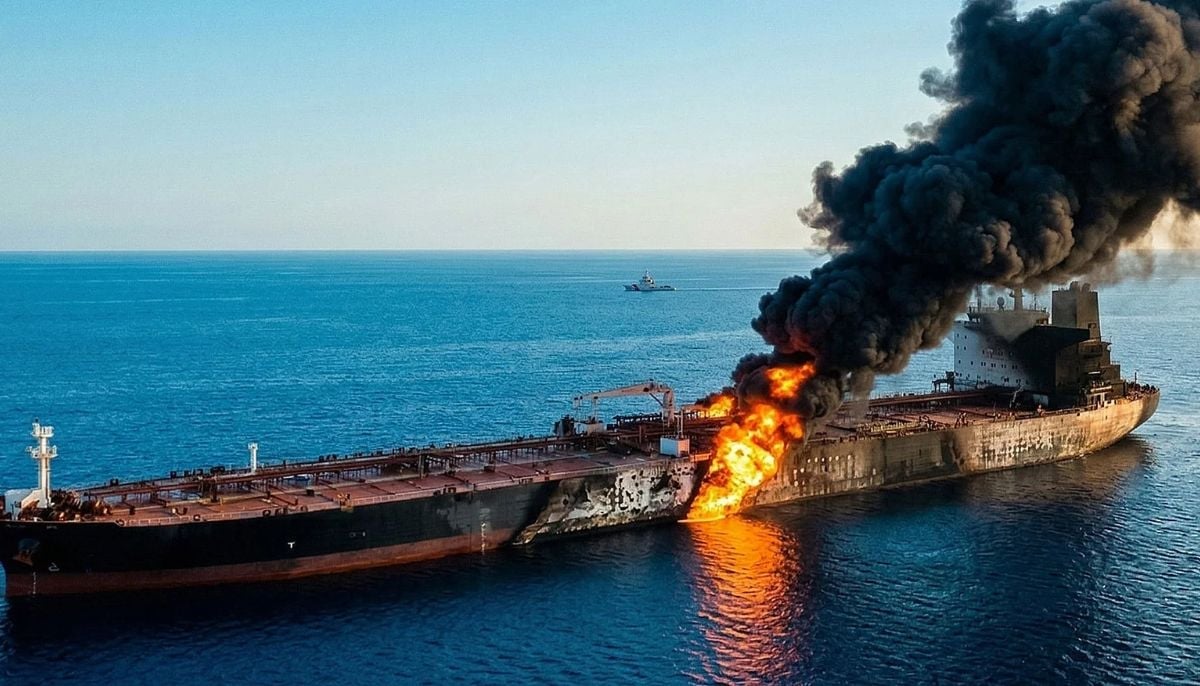
Why I think the war will end eventually – and I will buy a sell-off
As shared on FH Premium earlier this week.
Both the US and Iran have material constraints here.
For Trump it is clear – the longer this war goes on, the longer that oil prices stay high, the more damage to the global economy, the more unpopular Trump gets. In an election year.
Say what you want about Trump, but he is a businessman at heart. I have no doubt he has realised this Iran war is a big mistake, and he is desperately finding a way to end this war quickly – without losing face.
For Iran on the other hand.
They fought a 12 day war with US-Israel barely 9 months ago, and have been engaging in good faith diplomacy with US since. And yet the US used diplomacy as a ruse to drop a missile into a meeting of their senior leadership.
So immediate priority for Iran – prove to the US and the whole world that no one messes with Iran and gets away scot free.
They need to inflict enough pain on the US and global economy – that nobody thinks about messing with Iran for the next 20 years.
Their constraint though – they are facing up against the most powerful Air Force and Navy in the world.
At some point if this war goes on, US is going to start bombing civilian infrastructure – water purification plants, electricity plants etc (which to be clear is a war crime, but look at latest comments from Trump threatening this).
So Iran wants to cause pain to the US, but not to the point where Trump decides to just wipe out Iranian infrastructure for good.
At a certain point, both sides are incentivised to end this conflict.
Base case for me – I don’t think this will end in the next few days, more likely in the next few weeks.
Tail risk is that this drags on for months, but if that happens that’s COVID level tail risk, which probably leads to a global recession and stagflation.
If I Have $1 million for the Iran War Recovery: Buy S-REITs, Gold, or DBS Bank?
If I am right on the above.
The it’s broadly a COVID style playbook.
Let things play out and survive the short term.
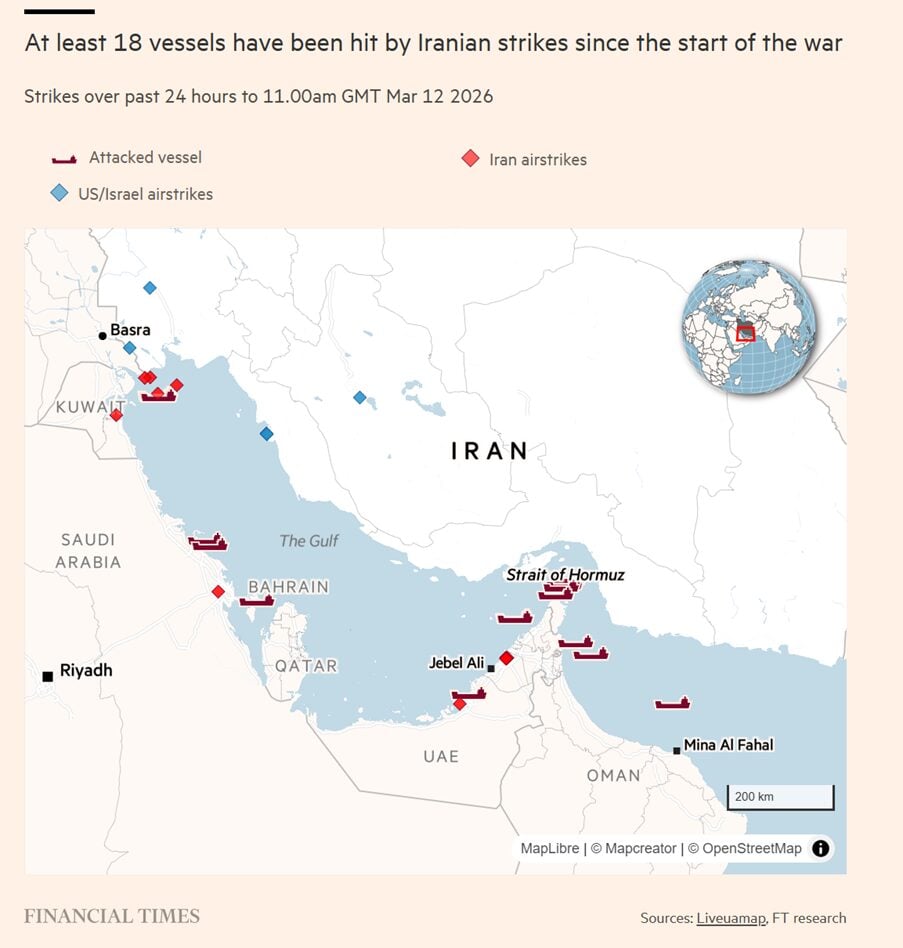
When markets are pricing in a gloomy outcome – months long Iran war and Strait of Hormuz closure.
Then the risk-reward starts to favour taking the other side.
So if you ask me, I would be watching events and price action very closely the next few weeks.
And if I see markets pricing in very extreme outcomes – I would be looking to add to positions.
And because markets tend to be forward looking, I wanted to do my homework in advance.
If I want to play the other side of this Iran war recovery – what would I buy?
On the SGX we have S-REITs or bank stocks.
On the global market we have Gold, Bitcoin, US Tech etc.
Which offers most attractive risk-reward?
Let’s discuss each broadly.
This is an FH Premium article that I am releasing to all readers, in the hopes that it helps you in your decision making. It will not be updated going forward.
My latest macro views, as well as my full stock watch and personal portfolio, are shared on FH Premium.
The case for buying DBS Bank
DBS at $55 has dropped roughly 10% from the top, and sits right on the 150 day moving average.
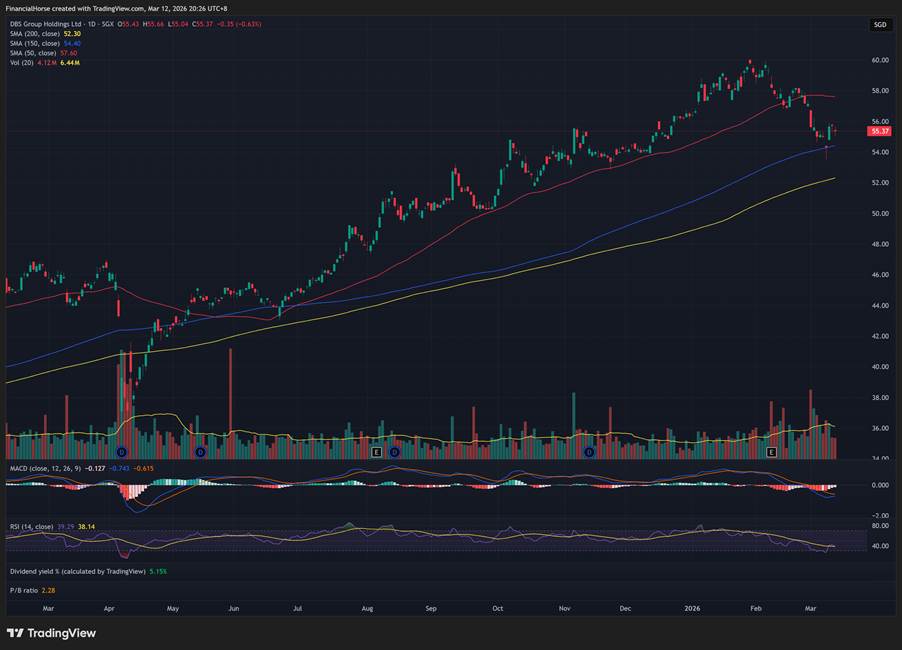
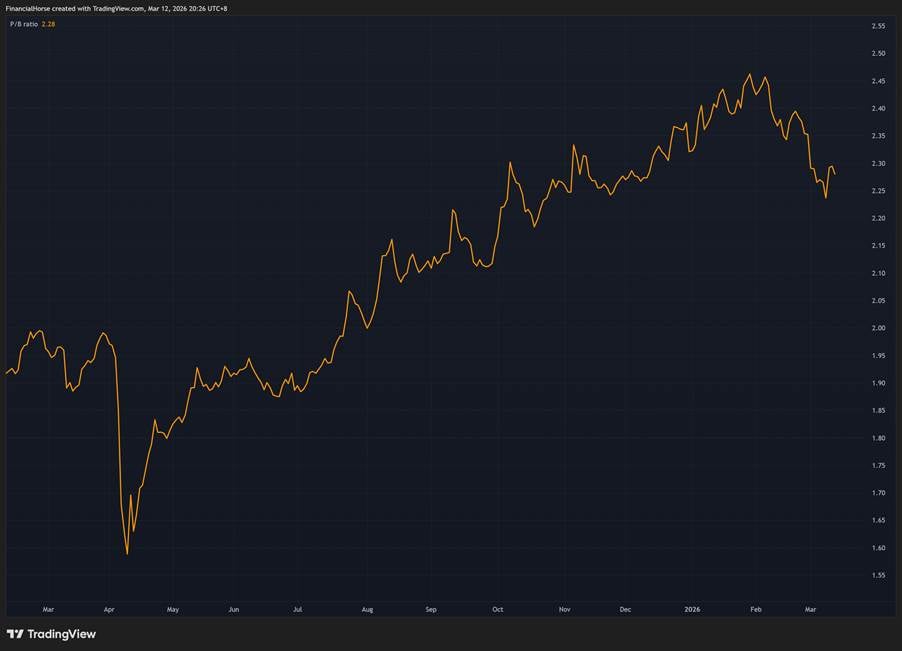
That said, DBS Bank trades at a 2.3x book value – which is hardly cheap.
How does DBS Bank perform if the Iran war ends?
Let’s reason from first principles.
If the Iran war is over.
Stagflationary fears go away – and the Feds can cut interest rates.
Bank net interest margins get compressed from lower rates, but they benefit from higher economic activity.
At current valuations, I suppose prices can recover to Jan highs.
How does DBS Bank perform if the Iran war continues?
If we get a tail risk event where the Strait of Hormuz is shut for months.
Then oil stays above $100 for months, we have global stagflation.
Because inflation is high, interest rates cannot get cut so bank lending rates stay high.
But because economic growth weakens, loan growth weakens, and loan defaults go up.
Net net that would be a negative for banks, and DBS at 2.3x book looks pretty scary in that scenario.
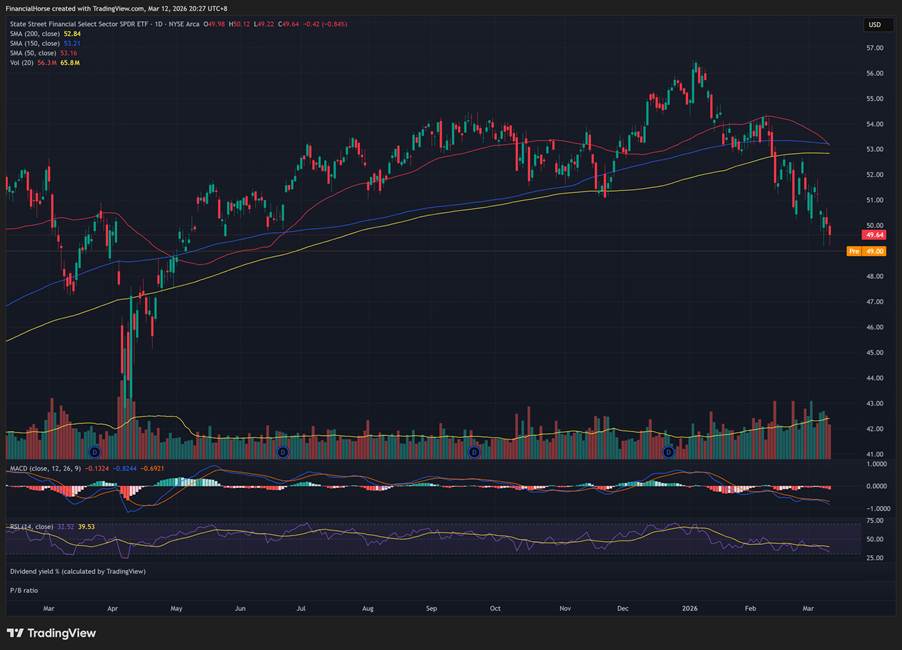
What I also find scary is that the US financial sector is down 15% since the start of the year with no signs of a bounce so far.
It all goes back to price?
If you ask me – it all goes back to what is priced into the stock.
If the stock is pricing in a worst case outcome – then I would take the risk-reward on the worst case outcome not materialising.
But current pricing looks to me as if markets are still pricing in a fairly optimistic macro outcome for DBS Bank.
That’s not fantastic risk-reward in my view.
But if the price changes, then yeah absolutely I would change my mind.
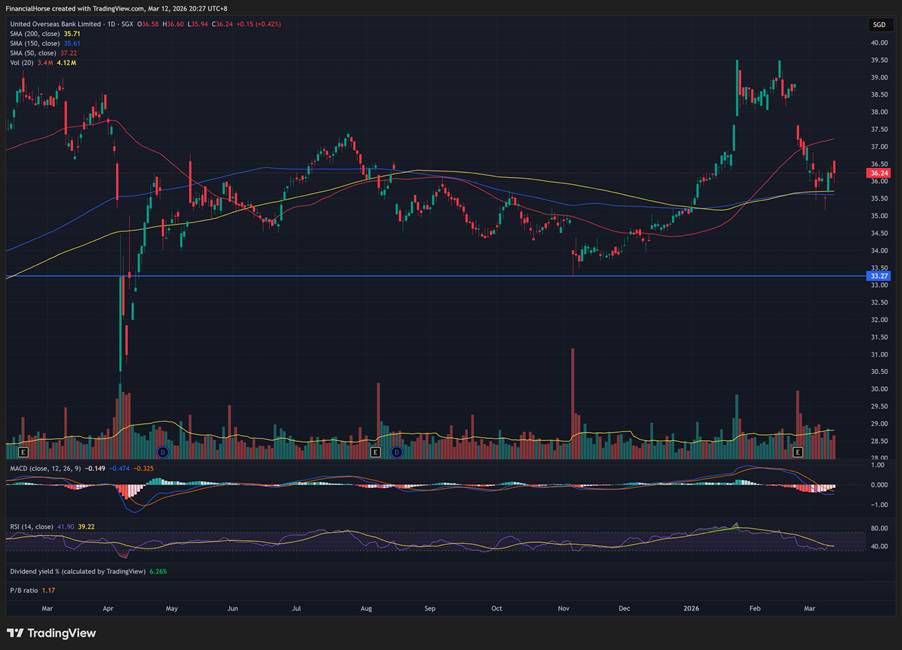
Alternatively you would argue that UOB bank looks much better value here at a 1.1x book value.
But then on the flip side you would say that UOB is not as great a company and you’re probably absolutely right as the recent earnings report showed.
Gun to my head – unless prices change in the weeks ahead, I don’t see banks as a great way to play the recovery (for now).
Never miss a post! Follow Financial Horse by subscribing or following us on your favorite platform:
Subscribe to our mailing list for exclusive content straight to your inbox:
The case for buying S-REITs
What about S-REITs?
A lot of you have asked me about S-REITs and whether my views have changed since the start of the year (when I shared that I would buy less REITs in 2026), so I wanted to share updated views.
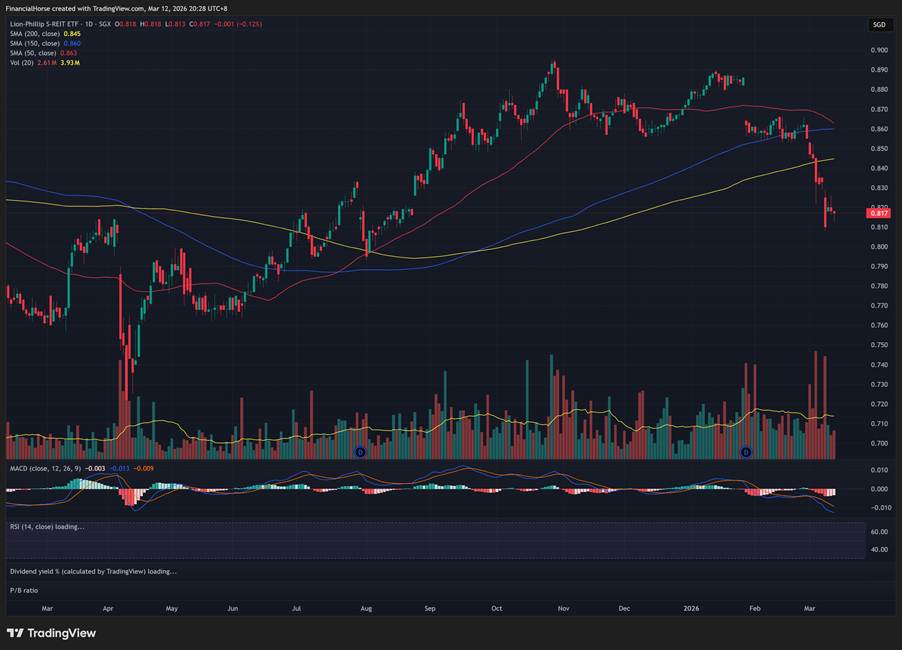
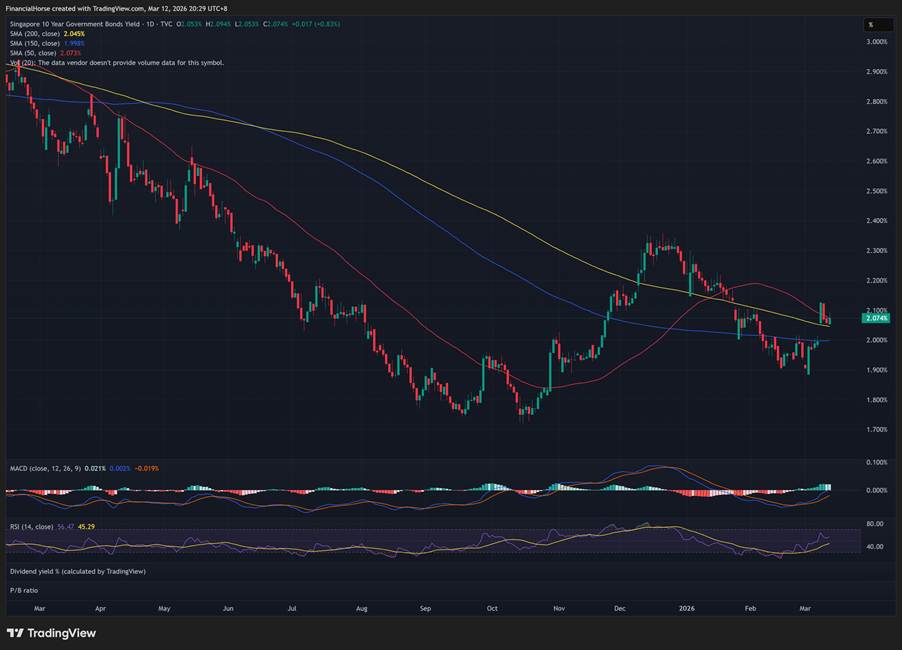
The REIT index is down about 8% from highs.
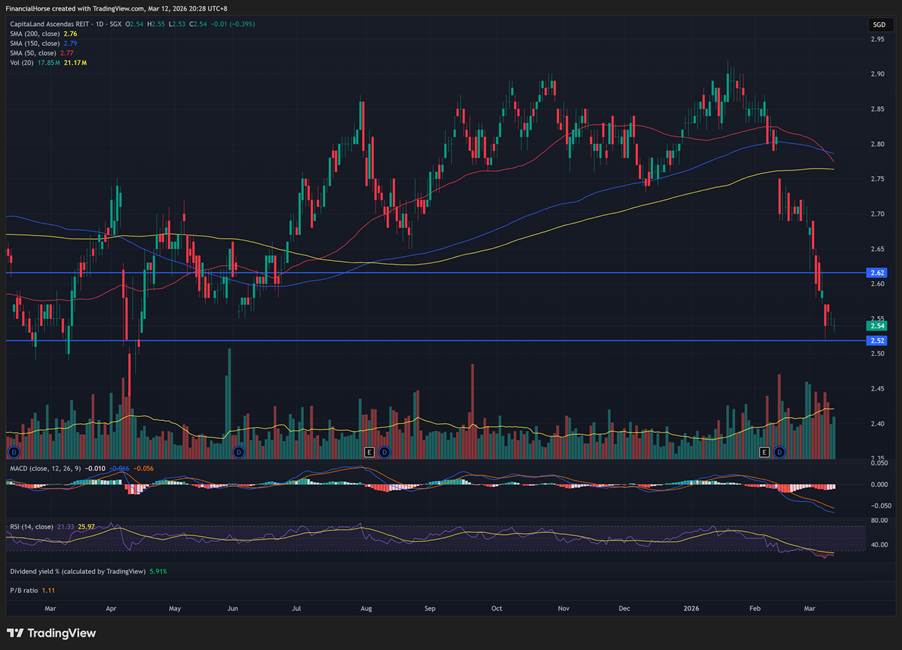
For Blue chip REITs like Ascendas REIT – they have plunged all the way back to April 2025 prices, and offer close to 6% dividend yields.
Compared to DBS Bank, that starts to look decent.
If the war ends, stagflationary fears go away, so we could see a relief rally for REITs.
But of course if this war drags on interest rates will march higher on inflationary fears, and REITs will continue to sell-off.
Gun to my head, I think REITs are an okay way to play the recovery, since they’re effectively a long duration play on lower rates.
But I don’t think it’s an asymmetric risk profile, because in the tail risk scenario REITs will have a fair bit of pain.
Some stock picking is required too because some REITs offer better risk reward than others.
The case for buying Gold
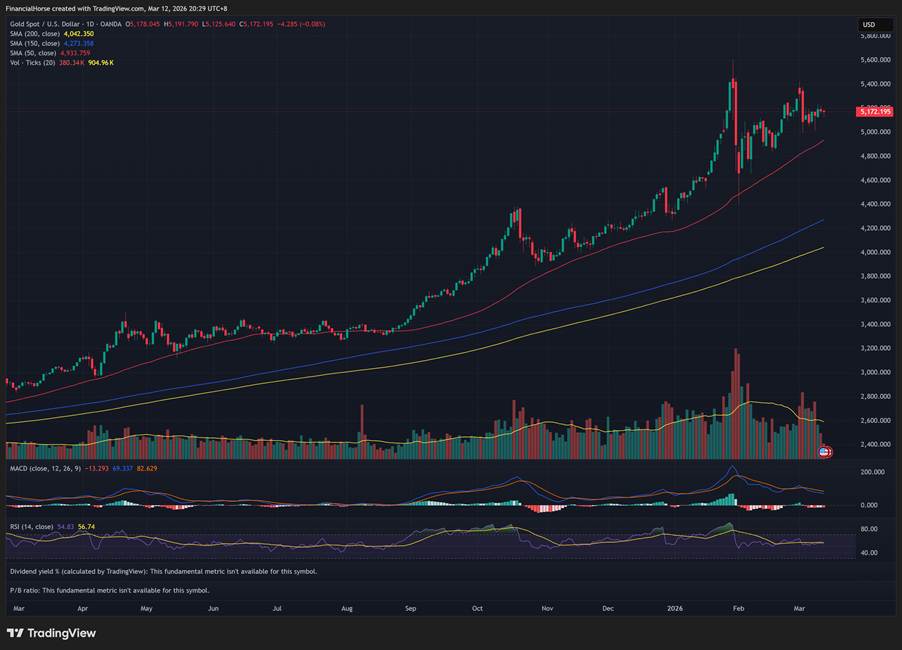
Gold is technically one of those that would do well the longer that this war goes on.
But gold is interesting because even if this war ends, it’s fairly clear that geopolitical conflict is not going away.
So gold (like defence stocks) look to have structural tailwinds this decade.
Perhaps the better asset class to play the recovery would be Bitcoin.
It has caught my attention that with all that is going on in the Middle East, a potential WWIII and Oil going to $200 fears – yet Bitcoin has been flat since the start of the war.
This is interesting, because when an asset class stops reacting to bad news, that is a sign of a potential bottom.
In my previous analyses I have showed that Bitcoin tends to bottom before stock markets, so if markets think the war will end within weeks (as is my base case), Bitcoin could be frontrunning that.
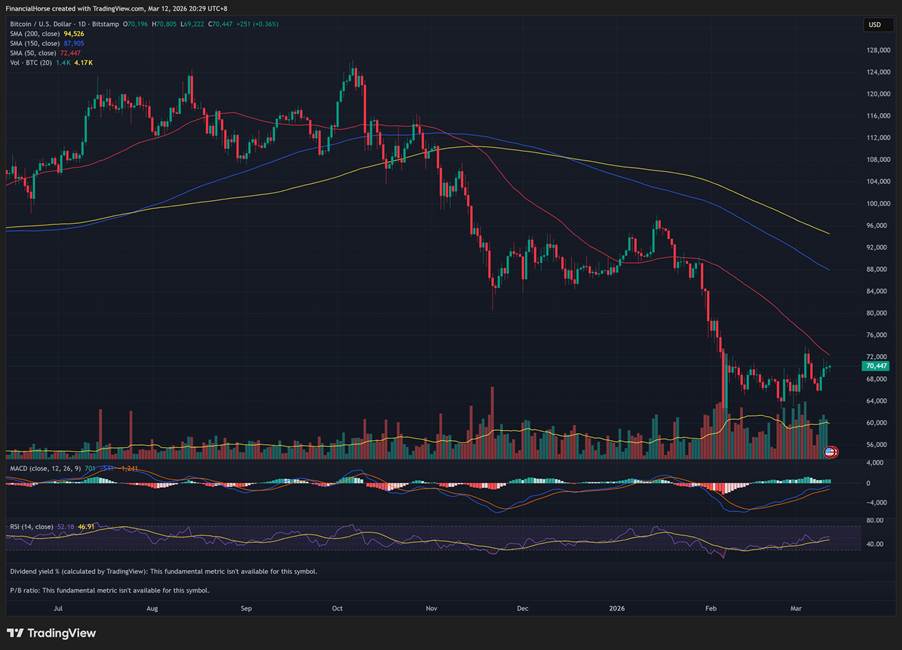
The downside of course, is that if the war goes on, Bitcoin could drop to 40-50k.
But in a a recovery scenario with rate cuts, Bitcoin could go back up to 120k.
So unlike REITs, Bitcoin may have a true asymmetric risk-reward profile – provided that you can stomach the risk.
What about US Tech, Commodities etc
And then of course we have US Tech.
US Tech is an absolutely massive sector, which we then need to break down into:
- AI
- Software
- MAG7
Full coverage on US Tech is beyond the scope of this article, and I’ll do a more detailed analysis on FH Premium.
But long and short is that these are long duration assets, which will benefit from lower interest rates.
Together with the AI sell-off, I like them as a recovery play.
But don’t forget that the AI fears are still very real – some stocks are very vulnerable to the AI disruption, while other less so.
So this absolutely goes into stock picking territory if you want maximum bang for your buck.
Likewise with commodities.
I have been buying a basket of Fertilizer and Petrochemical stocks to play the Iran war fears, and that has done very well.
That said I think we’re in the later stages of this trade now, so I will look to exit and rotate into commodities like copper instead to play the other side of this recovery.
Closing Thoughts – Plenty of opportunities if you know where to look
Stanley Druckenmiller gave an interview with Morgan Stanley recently.
Where he said that macro has been dead for the past 15 years – but in his view, not anymore.
I agree.
The way the global macro is playing out, the way price action is playing out, this is a complete sea change from the 2010s where you just barbelled FAANG + REITS and went to bed.
This is a highly target rich environment with plenty of opportunities everywhere, with room to outperform via stock picking and market timing.
If you know where to look (and if you are right).
I’ve shared some high level views above on how I am seeing the big asset classes today, and how to play the eventual recovery (which to be clear, comes after you survive the short term volatility).
And to be absolutely clear – the above reflect my views as of 13 March.
Based on what I know on 13 March, and prices as of 13 March.
When the facts (or prices) change, I change my mind.
And regular readers of Financial Horse know that I am not wedded to any position.
When facts change, I have no qualms about changing my mind, and changing my portfolio.
My most updated thoughts are shared on FH Premium together with my full portfolio and stock watch, so do sign up if you are keen.
This is an FH Premium article that I am releasing to all readers, in the hopes that it helps you in your decision making. It will not be updated going forward.
My latest macro views, as well as my full stock watch and personal portfolio, are shared on FH Premium.
Interesting and well put together article. I would question your logic on gold though. My thinking goes along these lines:
1. The current cost of mining and refining gold is around about US$1600 per troy oun(for those who are interested a Troy Ounce is about 31.1 grams.
2. Historically speaking, the price of gold has tended to stay within a close range of the marginal production cost by say 20% to 30%. Right now the price of gold is is about 300% of the production cost (nice if you’re a gold miner).
3. When the price of a commodity (like gold) reaches the sort of levels we’re seeing for gold a lot more gold mines start to become viable. “Artisan mining” starts togather interest and people go fossicking for gold in Australian rivers, and even heavy sewage sludge can potentially start to become an interesting place to look for gold. This starts to increase the amount of gold reaching the market, and before the long the price starts to fall back to more realistic (rational) levels.
So, my thinking (rather like Warren Buffett’s) is that gold isn’t a wonderful “investment”. Sure it can be a hedge against turbulent times, and I hold a little bit of gold myself (via a physical gold ETF), and recently I’ve been taking some profit. There’s an old saying (and I can’t find somebody to attritute it to) that says “It’s a good idea to hold a bit of gold and hope that it doesn’t go up in value”.
That’s fair. I like gold as a mid term investment (and I myself hold a good amount), but the short term volatility is real as we saw this week with the drop to 4500. If stuff starts to break, investors sell whatever they can get their hands on, and for now that looks to be gold. The strong USD and inflation expectations is also a short term headwind for gold.