In my FH Premium article this week, I wrote that the Iran war is potentially the most significant geopolitical event since COVID.
And in COVID terms, it feels like we are in February of 2020.
Where despite all that is going on under the surface.
Markets are still quite complacent that things will go well.
And sure maybe it does and Trump TACOs in 2 weeks and the war is over.
But maybe it doesn’t, and then we have a market liquidation event.
As of today, we can’t rule either out.
And things definitely took a darker turn this week with an escalation in the war from both sides.
So I wanted to share my views in this article, and discuss whether to buy the dip, or whether this is COVID 2.0 and sell everything.
Significant escalation in the war this week
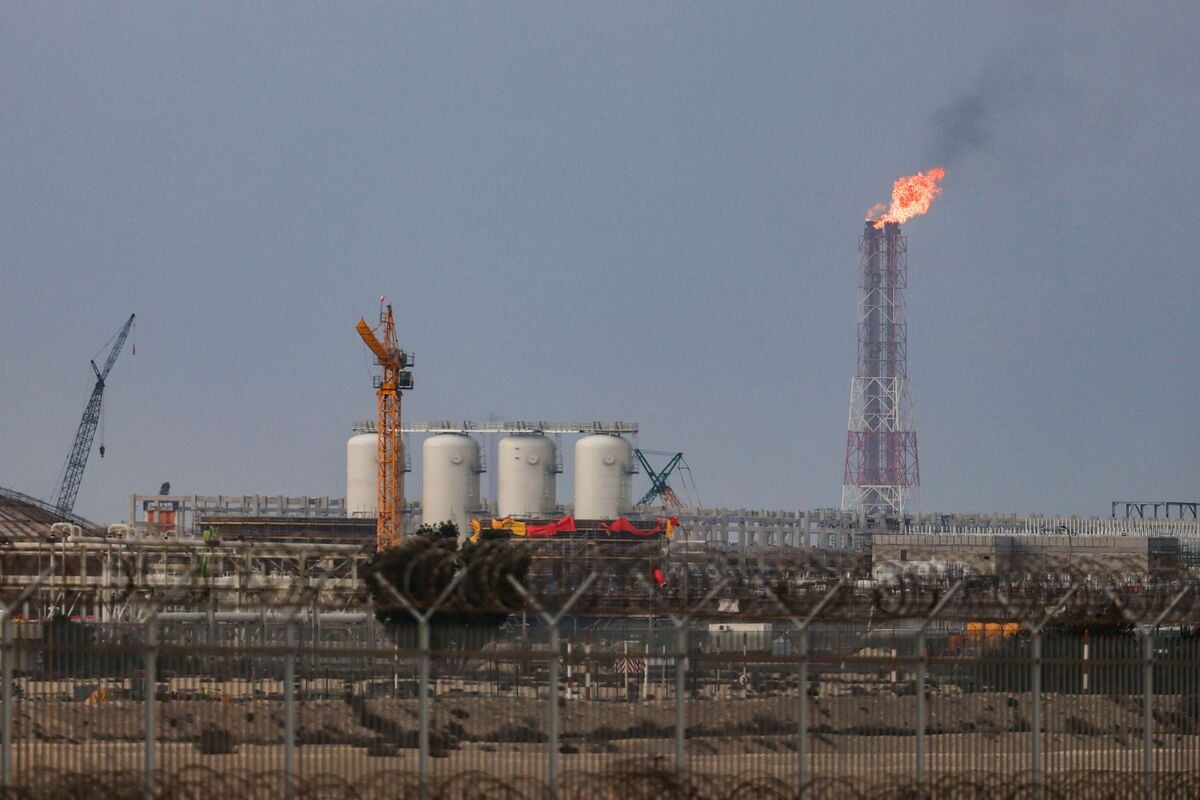
The big escalation this week, was the US-Israeli attack against Iranian gas infrastructure, and the subsequent retaliation from Iran against Qatar’s LNG terminal.
To summarise what exactly happened:
- On March 18, 2026, Israel executed unprecedented airstrikes against Iran’s South Pars gas field, crippling the Asaluyeh onshore hub that supplies over 70% of Iran’s domestic natural gas.
- Iran immediately retaliated by launching direct strikes against critical GCC energy infrastructure, including Qatar’s Ras Laffan LNG terminal (which handles roughly 20% of global supply), Saudi Arabia’s Yanbu port, and Kuwaiti refineries.
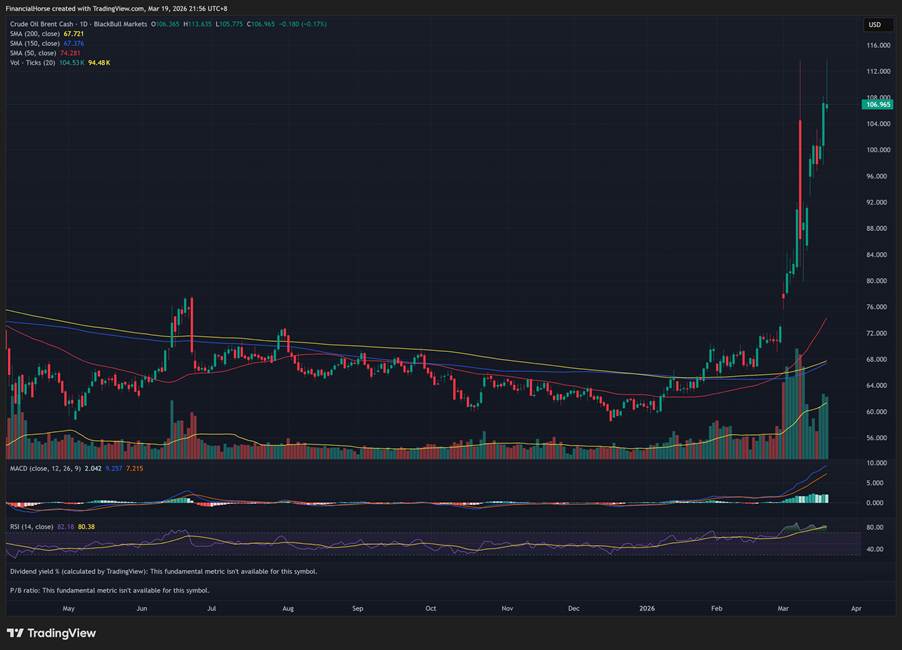
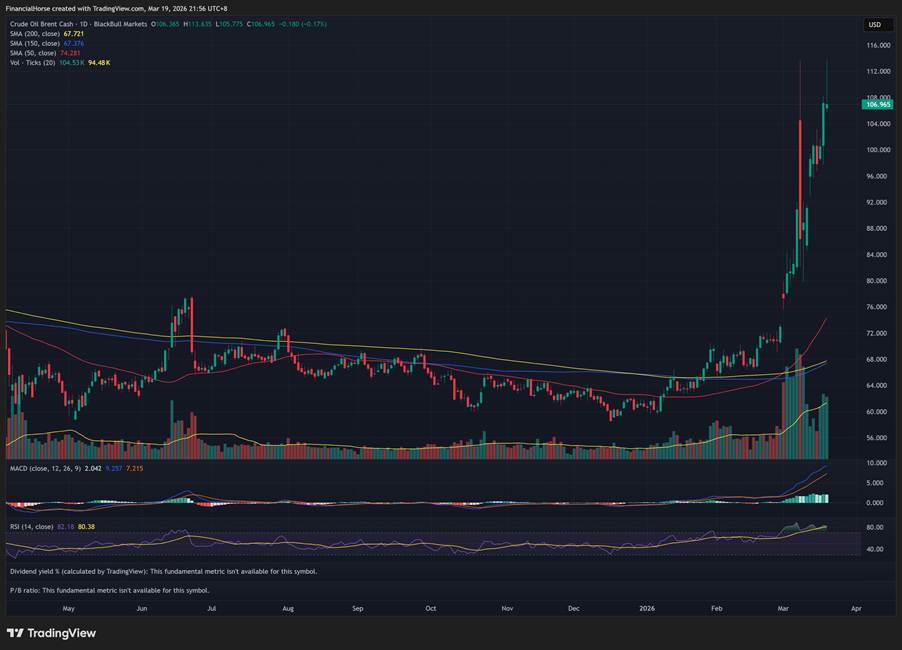
- Brent crude surged past $115–$116 per barrel. The European Dutch TTF gas benchmark spiked between 24% and 30% immediately following the strikes on Qatar’s LNG infrastructure
In a confusing turn of events, Trump first came out to say that he was aware of the attacks and authorized it.
And then less than 24 hours later he said that he was unhappy with Israel for launching the attack and called for no further attacks against Iranian oil / gas infrastructure.
But frankly, Trump is Trump, and at this stage of the war (or rather his presidency), it should be fairly clear that what Trump says is not of great importance – he can easily change his tone 24 hours later.
What matters more is the material constraints from both sides.
This is an FH Premium article that I am releasing to all readers, in the hopes that it helps you in your decision making. It will not be updated going forward.
My latest macro views, as well as my full stock watch and personal portfolio, are shared on FH Premium.
What are the material constraints for both sides?
Which brings us to the material constraints.
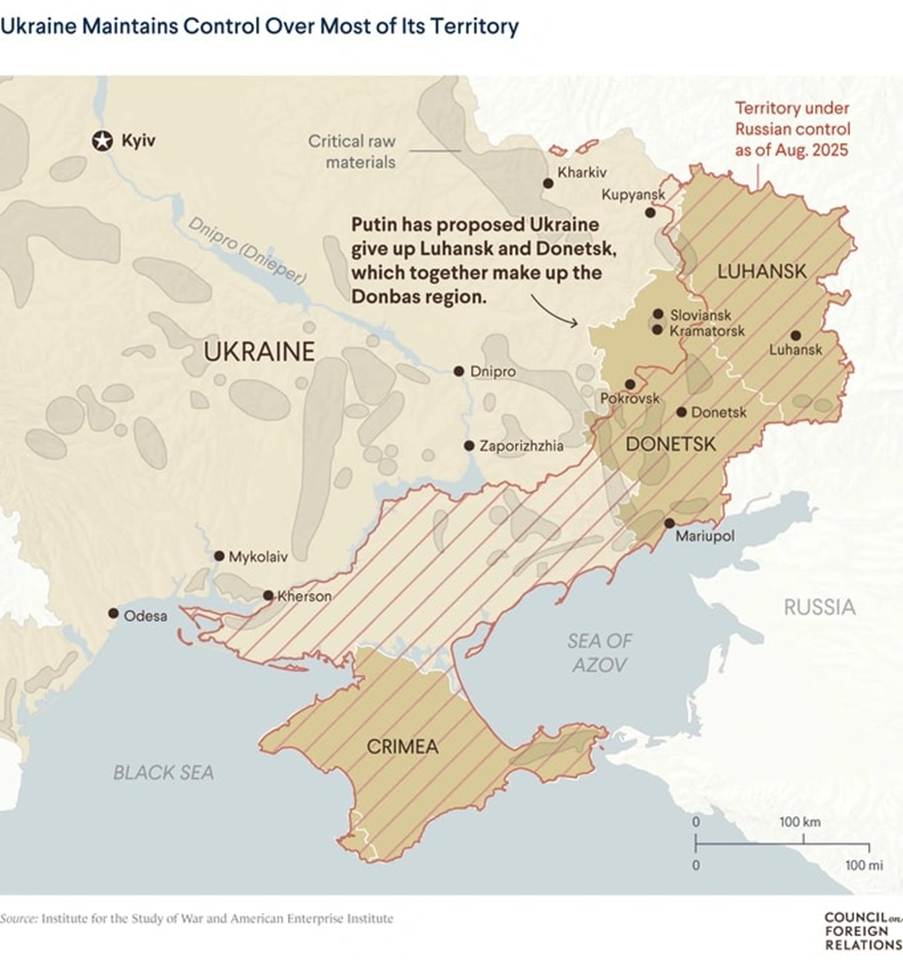
For the US – it’s looking a lot like the Russia Ukraine situation for them.
Just like Russia in 2022, the US started this war expecting it to be over in a week.
But Iran, just like Ukraine, is refusing to roll over.
This is a problem for the US – because if you as a Superpower with the most powerful Navy and Air Force in the world decide to start a war with a lesser regional power.
Then you bl***y well win the fight.
Otherwise, suddenly China, Russia, and the whole world is going to look at this and think to themselves – if even Iran can go toe to toe with the US and hold them to a standstill, maybe I have a chance too.
It’s a “god can bleed” moment, and then you have even bigger problems.
So for the US and for Trump, whatever their original motivations for starting this war.
They are now in a situation where they cannot lose face.
If they end the war, they MUST end it in a way that saves face for the US, and which does not look like a US defeat to the world.
This was exactly the dynamic that got Putin and Russia sucked into a 4 year war with Ukraine where the US happily delivered weapons and intelligence to Ukraine to prolong the war.
My fear is that the US is trapped in a similar dynamic today, only now they are Russia.
This is tricky – because Iran, just like Ukraine, is fighting for their home
The fundamental difference between the US and Iran here.
Is that Iran, just like Ukraine, is fighting this war in their home, for what they perceive to be a war of survival.
From their perspective, the fought a 12 day war with US-Israel in June 2025, entered into good faith negotiations with US on nuclear disarmament since, and yet the US dropped a missile into their senior leadership.
US-Israeli actions have shown them that if they back down from this fight, what happens next is that 12 months later US-Israel will drop another missile into their senior leadership.
From their perspective, US-Israel cannot be trusted, they only respect power.
So to secure peace and survival for Iran, Iran needs to:
- Show the world that you mess with Iran, and there will be real pain for the whole world
- Establish permanent deterrence
And if you read between the lines here.
It appears the Iranian strategy for (1) is to control the Strait of Hormuz for as long as it takes, and send oil price to the moon until Iranian demands are met.
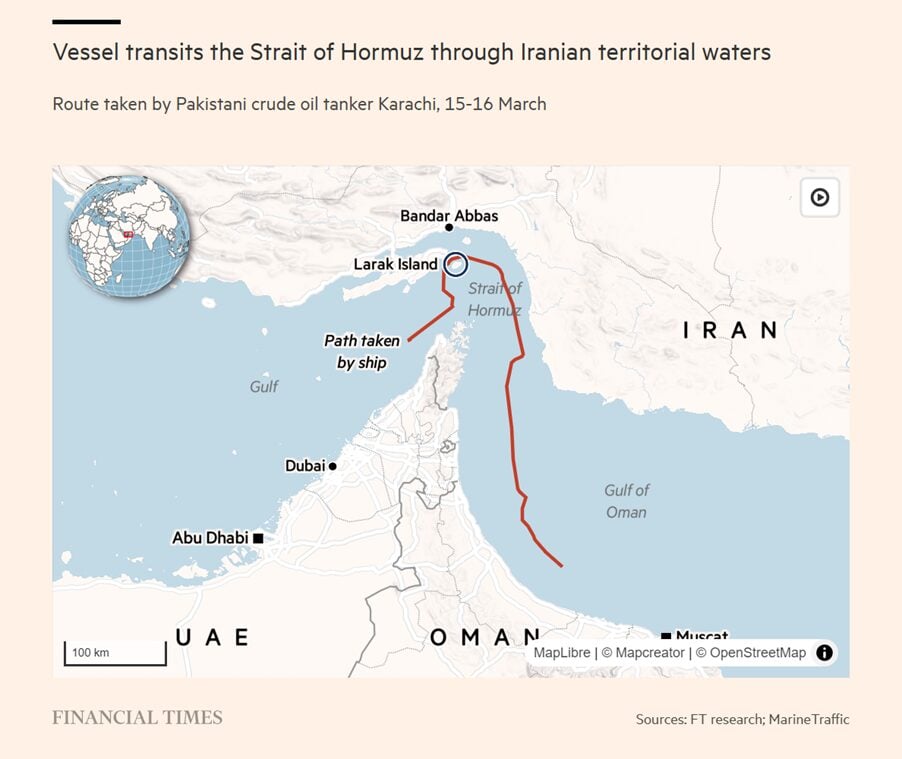
And the strategy for (2) is to eventually obtain nuclear weapons to establish permanent deterrence.
Nuclear is more of a medium term problem, but controlling the Strait of Hormuz, boy that is the one with immediate consequences for the whole world as you can see from oil price:
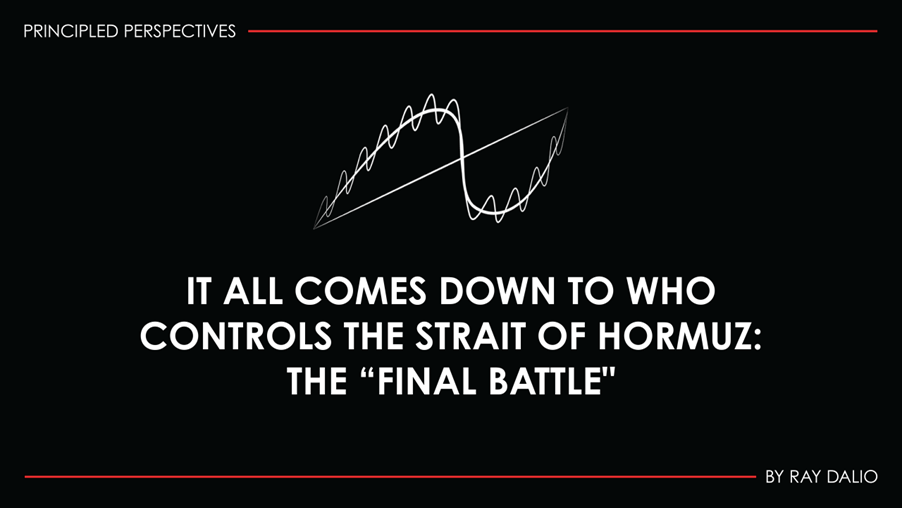
Ray Dalio argues that its going to come down to the Strait of Hormuz
Ray Dalio had a good piece on this that I recommend reading to fully understand the dynamics in play.
I extract the key sections below (emphasis mine):
The United States will be judged to have lost the war, and Iran will be judged to have won. That is because Iran controlling the Strait of Hormuz to use as a weapon would be a clear demonstration that the U.S. does not have the power to fix this situation. The consequences of allowing Iran to shut down the most important strait in the world, through which the right of passage must be ensured at all costs, would be hugely damaging to the United States, its allies in the region (especially its Gulf allies), countries that depend most on its oil flow, the world economy, and the world order. If Donald Trump and the U.S. don’t win this war—with victory being easily measured by whether they can ensure safe passage through the Strait of Hormuz—they also will be perceived to have caused a disastrous situation they could not fix. Whatever the reason that the United States doesn’t win control of Hormuz—whether it is because anti-war politics threaten President Trump’s political control ahead of the upcoming mid-term elections and he is afraid of that, because of his and the American electorate’s lack of willingness to suffer the losses of lives and money required to win this war, because the U.S. doesn’t have the military power to get and maintain control, or because he cannot bring together other countries in a consortium to keep this strait open —it doesn’t matter. President Trump and the U.S. will have lost.
My reading of history and sense of what is now happening leads me to believe that if the U.S. were to lose in this way, there would be a significant risk that losing control of Hormuz would be for the United States what the Suez Canal Crisis was for Great Britain (in 1956) and analogous defeats were for the Dutch Empire in the 18th century and the Spanish empire in the 17th century. The pattern of events that leads to the breakdown of empires is almost always the same. …I can tell you here that there are innumerable cases in which a perceived lesser power challenges the leading world power over the control of a critical trade route (e.g., Great Britain’s control of the Suez Canal being challenged by Egypt). In these cases, the dominant power (e.g., Great Britain) threatens the lesser power (e.g., Egypt) to open the route, and everyone watches and shifts their approaches to these countries and where their money goes based on what happens. This decisive “final battle” that determines the winners and the losers and whether the empire survives or falls reshapes history because people and financial flows quickly and naturally run from the losers. These shifts affect markets, especially the debt, currency, and gold markets, and geopolitical power. Seeing so many analogous cases led me to the following principle: * When the world’s dominant power that has the world’s reserve currency is overextended financially, and it reveals its weakness by losing both military and financial control, watch out for allies and creditors losing confidence, the loss of its reserve currency status, the selling of its debt assets, and the weakening of its currency, especially relative to gold.
For what it’s worth, I think Ray Dalio goes a bit hyperbole here, I don’t think the consequences for the US for losing this war is the end of empire.
But big picture wise I agree.
It’s starting to look like a showdown in the Strait of Hormuz.
The US needs to show that if the US Navy wants the Strait open, consider it a done deal.
And all Iran needs to do to win, is to keep this Strait closed.
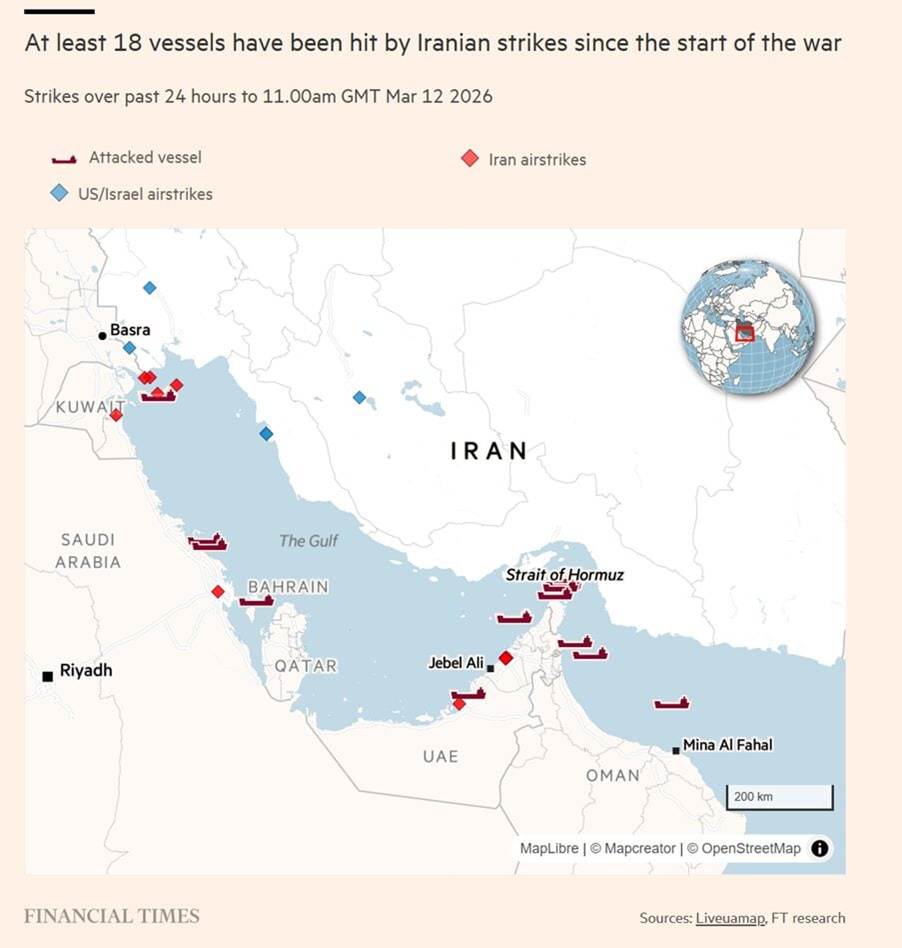
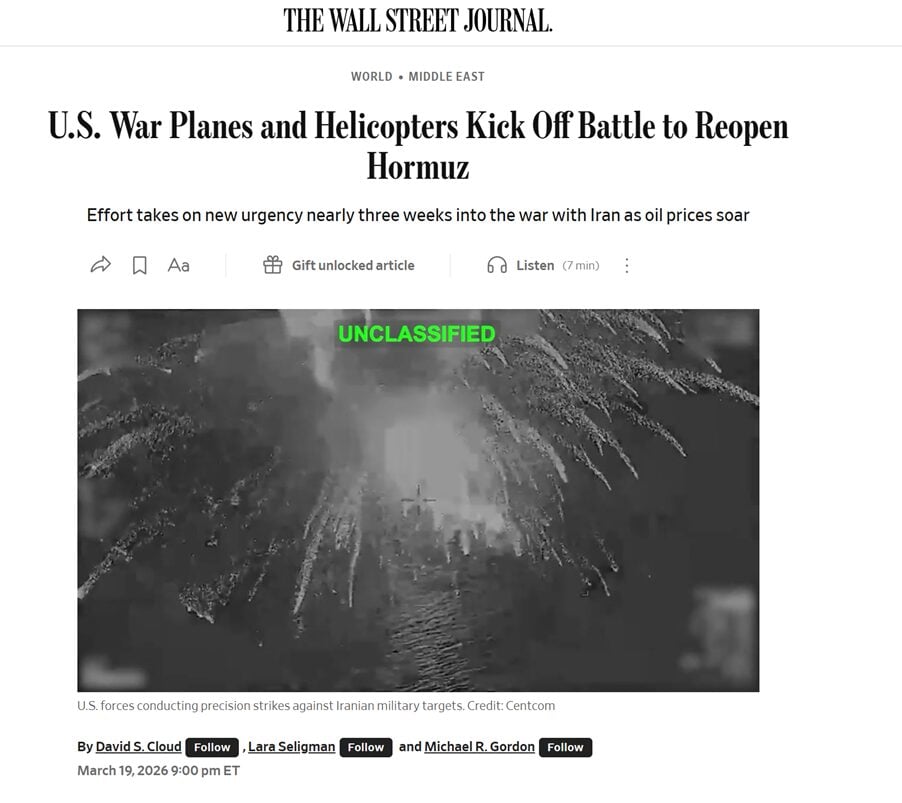
And it looks like the Battle of the Strait has begun, because these are the latest headlines from WSJ:
Never miss a post! Follow Financial Horse by subscribing or following us on your favorite platform:
Subscribe to our mailing list for exclusive content straight to your inbox:
This is classic asymmetric warfare, David vs Goliath stuff
Then we come to the practical reality.
Can the US realistically reopen the Strait of Hormuz, if Iran doesn’t want it open.
And boy things get really messy here – in favour of Iran.
The Strait of Hormuz is 34 km wide at its narrowest point.
Ships transiting the Strait are slow, predictable, and concentrated — basically sitting ducks.
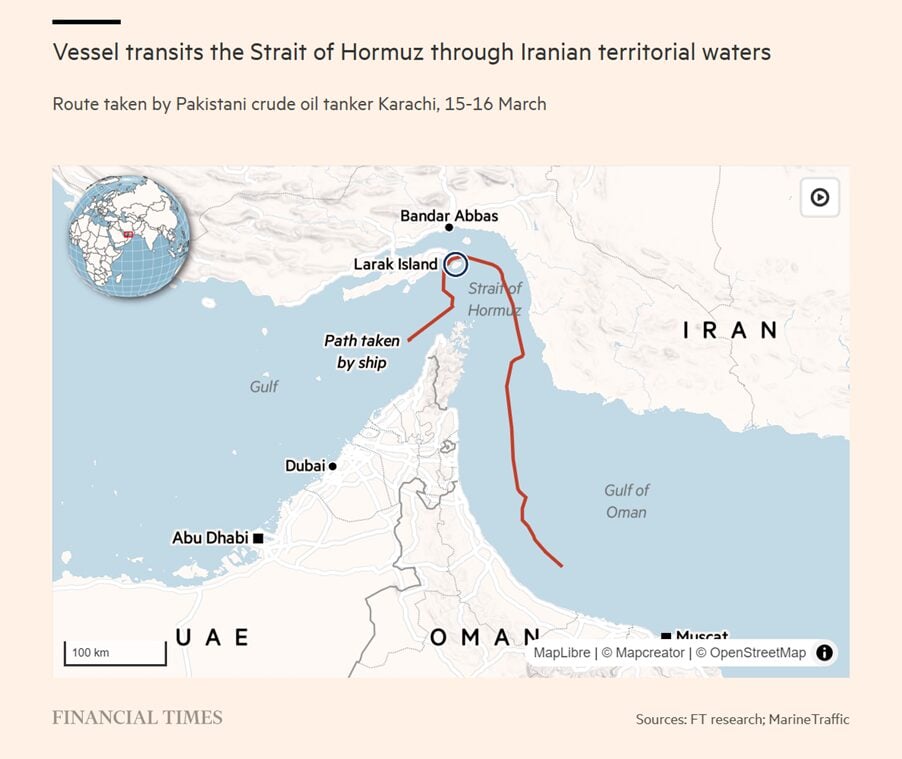
At the same time, Iran doesn’t need to match the US Navy ship-for-ship. Its strategy is layered asymmetric denial:
- Mines
- Anti-ship cruise missiles
- Drones
- Submarines
- Shore based artillery / rockets
And Iran has over 200-300km of coastline surrounding the Strait.
I asked Claude, and this was what it said:
The US almost certainly cannot keep the Strait of Hormuz continuously open against a determined Iranian closure attempt in the short term (days to weeks). Iran’s anti-access/area-denial (A2/AD) toolkit — mines, coastal missiles, fast attack craft, submarines — creates a temporary denial capability that would disrupt traffic even under US military response. However, the US can reopen and secure the Strait within 2–6 weeks at significant cost, making Iranian closure a wasting asset, not a permanent blockade.
In plain English – realistically if the US absolutely wants to keep the Strait open by force, they need to put boots on the ground on the coastline.
And it will cost American lives.
And I’m just going to put it out there that the US putting boots on the ground in Iran would be the single greatest mistake Trump could make since well, starting the Iran war 3 weeks ago.
US putting boots on the ground instantly turns this into a Ukraine style scenario where the war could drag on for months with significant loss of US lives.
Boots on the ground, and I start to believe Dalio’s talk of the end of the US empire.
The Middle East is where empires go to die, just ask the Soviet Union how their Afghan adventure went.
Now my battlefield theory is a bit rusty since NS.
But looking at the geography, and the operational reality.
I’m going to say that if Iran wants the Strait closed, it is going to stay closed.
It’s going to come down to whether Iran wants to talk, or whether they want to fight.
My personal take on the situation?
Just the start of this week, my base case was for a negotiated offramp in the next 3 – 6 months, and a tail risk scenario of a months long Strait of Hormuz closure.
The events of this week have significantly raised the probability of the tail risks.
The problem now is that it is a face saving thing.
And it illustrates exactly why you don’t start wars, because once wars start these things take on a life of their own.
If US backs out of this war now, they will be judged to have lost, at significant cost to Trump (and US power).
If Iran backs out of this war now, unless they give up all their nuclear and military ambitions (and they won’t), likely US-Israel just bombs them again 12 months down the road. And with all that is happening, the leader who makes the decision to surrender to US-Israel? I’m not even sure he survives the next 30 days before getting replaced by the IRGC.
So how does this end?
I frankly don’t know, but a negotiated end requires BOTH Iran and US to both agree to back down.
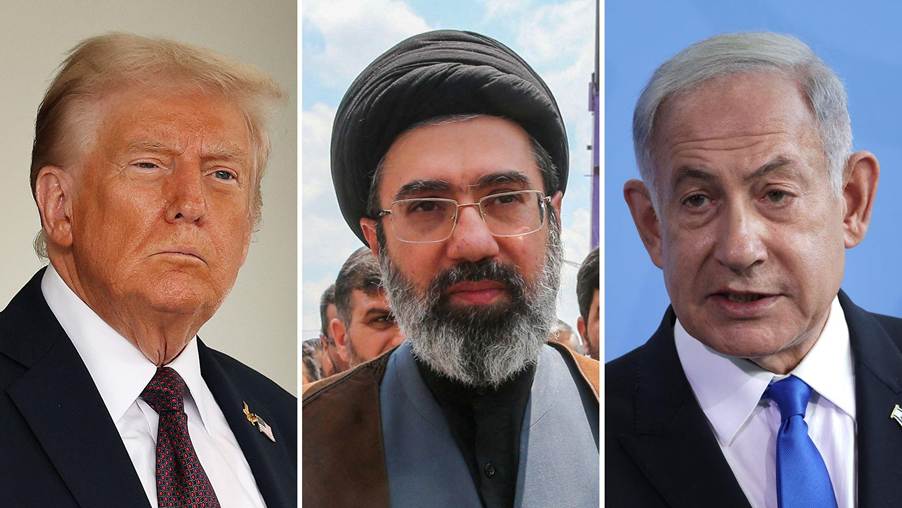
In a situation where one side is Trump, and the other side is the son of the dead Supreme Leader.
Gun to my head – my base case is still for a negotiated offramp in weeks.
But tail risk – a months long war which sends oil to $150 and beyond.
Yeah that probability is much, much higher now than it was just the start of this week.
Buy the Dip on the Iran War? Or is this COVID 2.0 and sell everything?
How would I invest in a climate like that?
I shared my more detailed gameplan on FH Premium this week, so do check it out if you are keen.
Generally speaking, I degrossed my portfolio slightly at the start of this war (when I shared that this could get messy), and I have decent dry powder to deploy.
I’ve generally been waiting for a sign that both parties are looking to TACO.
However, not only have I not seen any such signs, I actually see signs of escalation from both parties.
This is worrying.
So I have not deployed any of my dry powder in size just yet, but to be fair these things can change any time.
Because of my dry powder, I’m fine to just sit through the volatility and see what happens next.
If I continue to see signs of escalation, they I’ll won’t deploy the cash, and I may even trim positions.
If I see early signs of deescalation, then at current valuations I see a lot of great opportunities out there to buy.
I shared on FH Premium on the potential plays for a Iran war recovery, and a lot of them just became much more attractive after this week’s sell-off.
I’ll also be updating the Stock Watch this week for my latest views on single stocks to buy the dip and play the recovery.
This is an FH Premium article that I am releasing to all readers, in the hopes that it helps you in your decision making. It will not be updated going forward.
My latest macro views, as well as my full stock watch and personal portfolio, are shared on FH Premium.
It’s taco time while saving face
Yes. The only question is whether Iran lets him Taco. We saw this the past few days. Trump can say all he wants, but if Iran keeps firing missiles at ships in the Strait of Hormuz then we have a big problem.
I am gonna say yes, it will be very much like last year with China
Both sides need to save face while showing their respective populations that they displayed strength
Ok let’s see then! This is the best case outcome – cooler heads prevail.
Which is more difficult: controlling a virus or controlling an over intense ego maniac?
I have not sold any of my holding which is rather substantial. In fact over the 3 weeks I added a few more lots.
I think the countries in the region need to come to their senses in view of the strategies Iran has adopted which no one expects. Most of these countries are monarchies which have to provide for the subjects. The destruction of their overwhelming principal source of income will result in very serious long lasting wide spread and wide ranging consequences
To be fair this is my base case too. But I would say the probability of a tail risk outcome has gone up materially.
Agree with Eugene.
I have already deployed 30% of my dry powder