When people compare cities, they usually start with the headline number.
Singapore is expensive. London is expensive. New York is expensive. Bali sounds cheap. But that can be misleading.
A home price on its own tells you very little.
What matters more is the relationship between prices, salaries, rents, mortgage costs, and one simple question: is the average local actually supposed to buy there?
Singapore: expensive, but not in the usual way
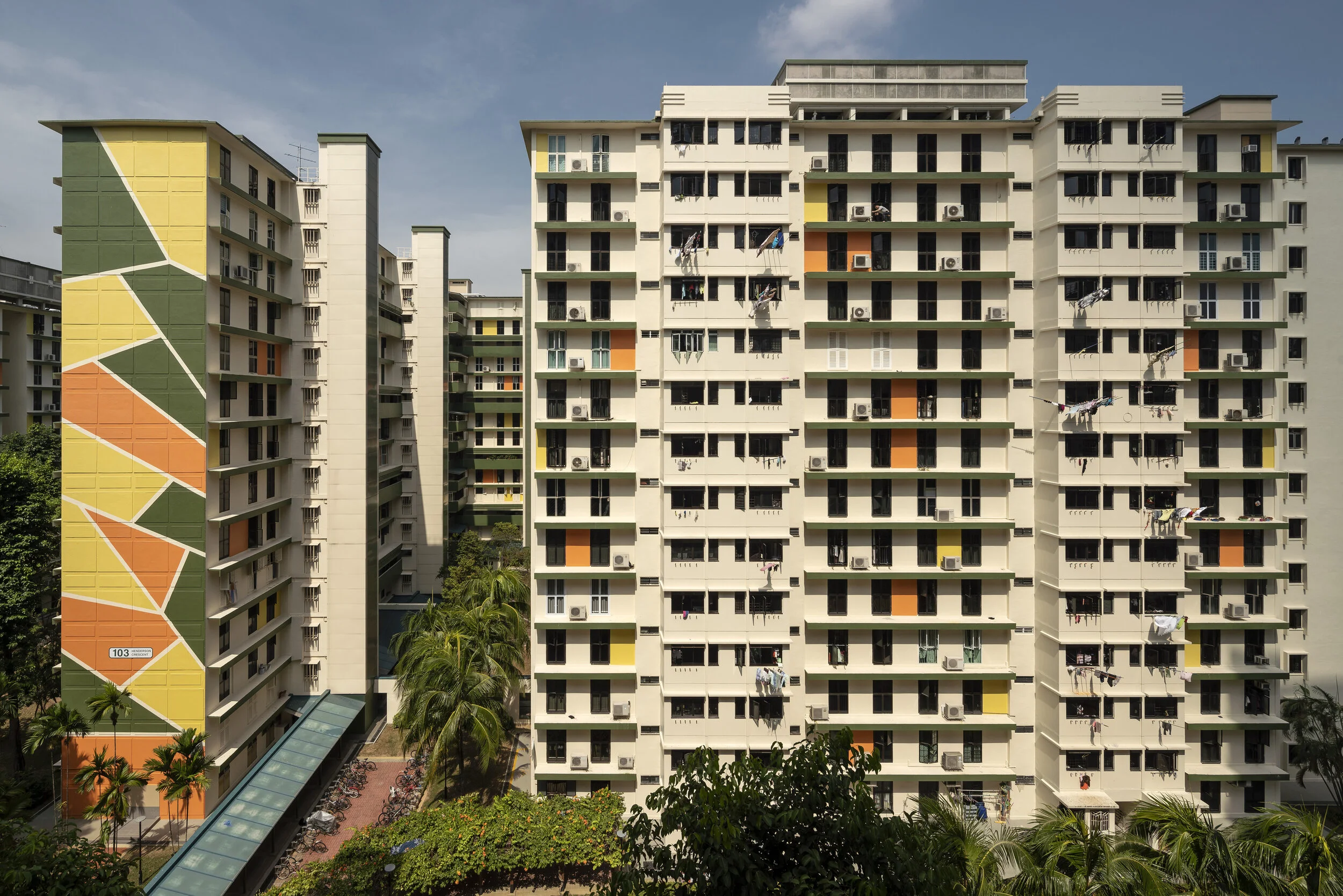
Singapore is one of the easiest cities to misread.
Yes, central private homes are extremely expensive. But that is not the housing reality for most locals.
Official data shows that 90.8% of resident households were owner-occupied in 2024, and 77.2% of resident households in 2025 lived in HDB homes.
So Singapore is not simply a story of ordinary people being priced out of homeownership.
It is a story of a country where the state still plays a very large role in keeping mass ownership alive, even while the private market is very expensive.
That is why Singapore feels so different from London or New York.
The private market is costly, but it does not fully describe how most residents live.
In Singapore, the divide is really between the public mass market and the much more expensive private market.
For many locals, buying is still normal and kept fairly affordable.
HDB policy is continually adjusted around young couples and singles, which reinforces that housing here is treated as an important social issue, not just a market outcome.
This article was written by a Financial Horse Contributor.
Kuala Lumpur and Bangkok: Cheap on paper

Kuala Lumpur and Bangkok often get grouped together as cheaper Southeast Asian capitals.
On current Numbeo numbers, Kuala Lumpur looks demanding but still relatively workable against local pay. Bangkok looks much tighter.
In plain English: Kuala Lumpur may be cheaper than Singapore, but Bangkok is the one where “affordable city” starts to sound more true for tourists and expats than for the average local trying to buy centrally.
Kuala Lumpur looks more workable than its reputation, but interviews suggest that “workable” is doing a lot of work.
Buyers are still getting on the ladder, but often only by leaning on affordable-housing schemes, accepting homes farther from the core, or swallowing a housing bill that already takes a large bite out of income.
CNA recently spoke to a first-time buyer in Shah Alam who could only make the numbers work through the Rumah Selangorku scheme, and to a Petaling Jaya homeowner whose mortgage, taxes and condo fees take up about 40% of take-home pay.
So Kuala Lumpur is not exactly easy. It is better understood as a city where ownership is still possible for parts of the middle class, but increasingly only through compromise.
The 2025 ULI Asia Pacific Home Attainability Index put Kuala Lumpur apartments at a median multiple of 5.0, right on its threshold for “attainable”, versus 20.3 for Bangkok condos — which helps explain why Kuala Lumpur still looks possible, even if it no longer feels comfortable.
This is a useful reminder that a city can feel cheap day to day and still be hard to buy into. Food and transport may be affordable. Property is another matter.
A low cost-of-living reputation does not automatically mean the housing market works for local wages.
Younger Thais are increasingly leaning toward renting over buying, and some reporting says homeownership is becoming more of a long-term aspiration than an early-career milestone.
Tokyo and Sydney: young couples are being forced to compromise

Tokyo is the quiet surprise in this group.
Homes are not cheap, but borrowing is.
Numbeo’s current snapshot puts Tokyo’s 20-year mortgage rate at about 1.74%, versus about 6.05% in Sydney.
That matters because people do not buy price-per-square-metre charts. They buy monthly payments. Tokyo is still expensive, but the financing burden is much lighter.
Financing is still relatively cheap by global standards, but the trade-off is that couples may buy smaller, older, or further out than they expected. In other words, Tokyo often preserves the possibility of ownership by shrinking the dream.
Sydney is the reverse case. Salaries are decent, so it can look manageable on paper.
But higher mortgage costs make the monthly reality tougher.
The first hurdle is often not the monthly dream home payment, but the deposit. ABC reported in February 2026 that a young couple now needs an average of five years to save a 20% deposit for an entry-level house in a major Australian city, and in Sydney it is seven years and seven months.
Domain’s 2026 data cited by ABC also show that servicing the mortgage on an entry-level Sydney house would take 61.8% of a couple’s income.
That is why the Sydney story feels less like “we bought something smaller than planned” and more like “we spent years just trying to qualify.”
ABC’s reporting shows many young buyers are still relying on family support or moving back home to save. One couple interviewed by ABC said living with parents for about a year was “essential” because paying rent while saving was not workable.
In Sydney, Reuters reported that prices had outpaced wage growth, that entry-level homes were in short supply, and that housing stress had become strong enough to drive a political backlash from younger voters.
Tokyo shows that high prices can still be livable if money is cheap.
Sydney shows that even a decent salary can feel stretched when borrowing stays expensive.
Young couples in Tokyo and Sydney are both being forced to compromise, but not in the same way.
In Tokyo, the compromise is often about space: smaller apartments, older units, or longer commutes, even if low borrowing costs still keep ownership within reach.
In Sydney, the compromise starts earlier and feels harsher: years spent saving for a deposit, high repayment burdens, and a growing dependence on family help or government schemes just to enter the market at all.
London and New York: cities where access comes at a price

London and New York are classic access-premium cities.
People do not just pay for housing there.
They pay for jobs, networks, prestige, culture, and convenience. But that premium is real.
In London, Census 2021 data showed only 46.8% of households were owner-occupied, while 30.0% rented privately and 23.1% rented socially.
In New York, the city’s 2023 Housing and Vacancy Survey found that two out of every three households rented their home.
The monthly burden is real too.
Official ONS data show average private rent in London was £2,271 in November 2025, the highest in the UK.
In New York, the 2023 housing survey found that renter households earning under US$70,000 had a median rent-to-income ratio of 54%, which is severe.
These are cities where renting is not a short stop on the way to ownership for many people. It is simply how urban life works.
In many rich cities, the real question is no longer “when do I buy?” but “how do I stay?”
In a growing number of global cities, the median resident is not climbing a neat homeownership ladder at all.
Housing is no longer mainly about getting on the ladder.
It is about finding a stable way to remain in the city and that option is increasingly being realized through renting.
Rent is shaping adulthood
In the UK, an IFS study found nearly 1.7 million adults aged 24–34, about 20%, were living with parents, up from 13% in 2006.
The study said young adults in London can save up to £1,000 a month by staying at home.
Separately, the English Housing Survey found private renters in London spent 46% of income on housing costs.
In New York, the 2023 Housing and Vacancy Survey found that for renter households earning under US$70,000, the typical rent-to-income ratio was 54%.
In London and New York, housing is not just a budget item.
It increasingly shapes when people move out, whether they live alone, and how long they delay marriage, children, or buying altogether.
Never miss a post! Follow Financial Horse by subscribing or following us on your favorite platform:
Subscribe to our mailing list for exclusive content straight to your inbox:
San Francisco and Berlin: both renter-heavy, but for different reasons
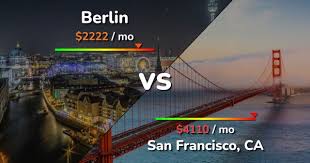
San Francisco looks better than many people expect once income is factored in.
Current Numbeo data show very high local pay, which helps offset high housing costs. But that does not make it a broad homeownership city.
US Census QuickFacts still put San Francisco’s owner-occupied housing unit rate at just 38.2% in 2020–2024.
So San Francisco is not cheap. It is just one of the few places where local salaries soften the blow.
Berlin is different. It also looks relatively manageable in this comparison, but the bigger point is that Germany is a renter country.
Eurostat said in early 2026 that 53% of Germany’s population were tenants in 2024, making Germany the only EU country where renting still outweighed owning. So Berlin should not be read as a city where everyone is expected to buy. It is better read as a place where long-term renting is still a normal part of the system.
Bali: better understood through foreigners than locals

Bali is the least useful market to read through local wage math alone.
For one thing, the buyer is often not the average local household.
For another, foreigners cannot directly hold Hak Milik freehold title. Indonesia’s land authorities in Bali said in July 2025 that foreigners mainly use Hak Pakai structures, and that there were about 463 plots in Bali under Hak Pakai in foreigners’ names as of March 2025. That already tells you this is not a normal local-owner market in the Singapore or Tokyo sense.
Bali also runs on tourism and outside money.
Bali’s statistics agency said Accommodation and Food Service Activities remained the island’s largest sector in Q3 2025, contributing 23.07% of the provincial economy. The same agency reported 682,866 foreign tourist arrivals in August 2025 alone.
So when people talk about buying in Bali, they are often really talking about a lifestyle market for foreigners, long-stay residents, and investors, not a normal local salary-to-house-price market.
If you earn in Singapore, Australia, Europe, or the US, Bali may look accessible. If you look at local wages, it looks very different.
Bali is best understood as a foreign-demand housing story layered onto a local economy, not as a standard city housing market.
Buying a house with friends?
A growing number of younger buyers are also trying a more radical workaround: purchasing with friends.
Coldwell Banker’s 2025 American Dream Report found that 33% of Americans had considered co-buying with a friend or coworker, while 71% of aspiring homeowners said they were delaying major life decisions until they could afford a home.
Reuters recently profiled young buyers taking exactly this route, with one financial planner noting that pooled income and equity can lift borrowing power, but warning that co-buying works only if the legal agreement is as clear as the friendship.
It is a revealing sign of where urban housing has gone: in some markets, the problem is no longer simply whether young people want to buy. It is whether buying alone is still realistic at all.
So what do global home prices really tell us?
So what do these cities really tell us? That housing is never just about price.
A home can look expensive and still sit within a system that supports ownership, as in Singapore.
It can look manageable on paper but feel far tighter in real life, as in Bangkok.
It can be eased by cheap financing, as in Tokyo, or made heavier by borrowing costs, as in Sydney.
In London and New York, the deeper story is not just high prices, but the normalisation of long-term renting.
San Francisco works better only because pay is high enough to absorb some of the shock, while Berlin shows what a renter-first culture looks like when renting is treated as a stable norm rather than a temporary stage.
Bali, meanwhile, is best understood not as a conventional local housing market, but as a foreign lifestyle market shaped by outside money.
The bigger point is that home prices only become meaningful once you ask what kind of urban life you are really buying.