The super rich don’t just have more money – they use money very differently.
They obsess over ownership and deal structure, not salary, they are oddly frugal in daily life but ruthless in capital allocation, and they think in decades, not months, constantly reinvesting and building systems around themselves.
You can’t copy their capital, but you can copy their habits and frameworks.

This article was written by a Financial Horse Contributor.
1. They chase ownership, not just income
Most people ask, “What’s the salary?”
The ultra-wealthy ask, “What do I own?”
Oprah: “Not just do the show – own it”
In a 2023 commencement speech, Oprah talked about how early in her career she pushed to own a piece of her show, not just host it – a move that was “virtually unheard of” at the time.
Instead of a standard TV host contract, she negotiated equity and control:
- Turned The Oprah Winfrey Show into Harpo Productions (Oprah spelled backwards).
- Later co-created the Oprah Winfrey Network (OWN), keeping a significant stake even after Discovery bought the majority.
Result: She didn’t just earn appearance fees – she owned the machine that produced the fees.
Bezos: “It’s all about the long term” (and equity)
In his early Amazon letters, Jeff Bezos wrote that a “fundamental measure of our success will be the shareholder value we create over the long term.”
Translation: he was building a giant equity compounder, not a cash-cow to milk quickly. For years:
- Amazon showed minimal accounting profits.
- Cash was ploughed back into logistics, tech, and market share.
Bezos took relatively modest cash comp, but his equity stake became one of the greatest fortunes ever created.
🔑 Lesson for us:
You don’t need your own TV network or FAANG stock. But you can tilt your life away from “just salary” toward:
- Equity in your own business or side hustle
- RSUs / stock options at work
- Broad market equity (index funds, ETFs) you hold for decades
The super rich understand: income pays rent; ownership builds dynasties.
2. They are weirdly frugal in life, ruthless in investing
There’s a striking pattern: very rich people living surprisingly normal lives – while moving billions around in the background.
Warren Buffett: Same house, insane capital allocation
Buffett still lives in the Omaha house he bought in 1958 for about US$31,500, drives himself around, and is famous for McDonald’s breakfasts and coupons.
Meanwhile, he:
- Controls hundreds of billions of capital at Berkshire.
- Will walk away from a deal over a few basis points of return.
A recent piece notes how his modest lifestyle reflects a deep belief in simplicity and prudence, even as his net worth sits around US$150 billion.
Buffett has said he could live anywhere but chooses Omaha because it keeps him away from Wall Street noise. His personal spending is boring; his investing is where the action is.
🔑 Pattern:
They often separate personal lifestyle from capital decision-making.
For normal investors, this translates to:
- Don’t flex with cars / luxury goods; flex quietly with your balance sheet.
- Keep consumption simple; be aggressive and thoughtful in how your capital is deployed.
3. They think in decades, not market cycles
Most people think in quarters – how’s the market this year?.
The super rich think in decades.
Bezos again: long-term ownership mindset
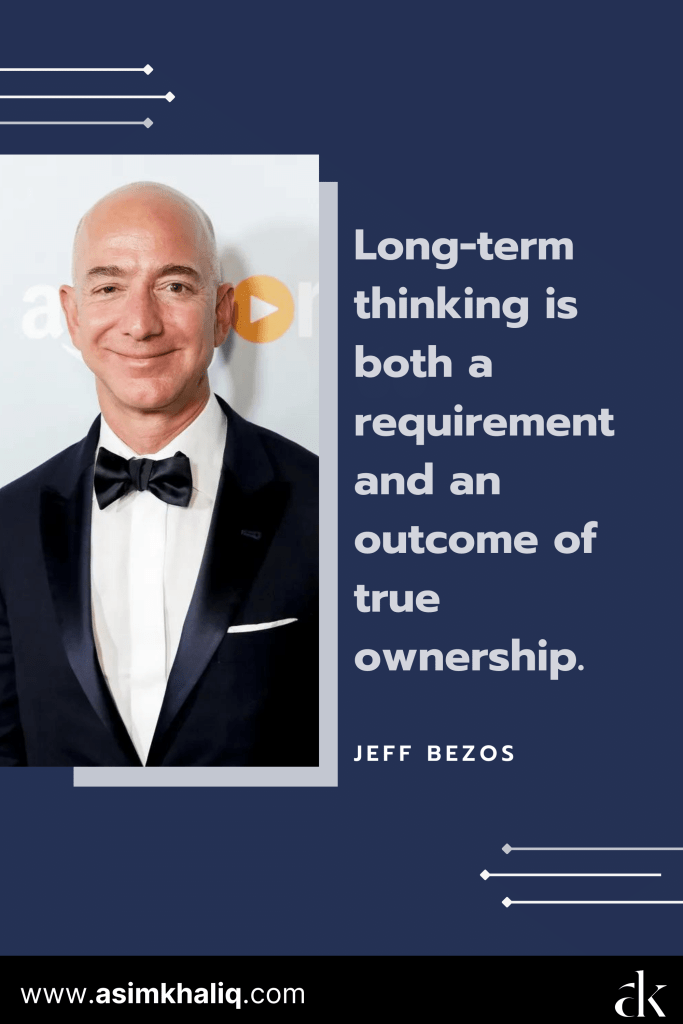
In another early Amazon letter, Bezos contrasts owners vs. tenants, arguing that long-term thinking is “both a requirement and an outcome of true ownership.”
He effectively told shareholders:
- We’ll sacrifice current earnings to grow free cash flow and competitive advantage.
- Scale and market leadership now → massive profits later.
That’s why Amazon spent years being mocked for “no profits” while quietly building one of the most powerful cash machines on earth.
Ray Dalio: “Cash is trash” (over long stretches)
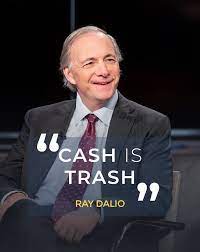
Ray Dalio’s controversial line – “Of course cash is still trash” – isn’t about never holding cash; it’s about the long-run erosion of purchasing power if you sit in cash forever.
He’s spent decades building All Weather portfolios designed to survive multiple cycles, not just next year’s Fed decision.
🔑 Lesson for us:
Rich people don’t ask “Will markets fall this year?”
They ask, “What system do I build so I’m richer in 10–20 years in almost any environment?”
A simple way to copy this:
- Commit to a 10–20 year horizon for your core equity holdings.
- Use boring, automatic contributions (DCA) + periodic rebalancing.
- Accept that bear markets are a feature, not a bug.
BTW – we share commentary on Singapore Investments every week, so do join our Telegram Channel (or Telegram Group), Facebook and Instagram to stay up to date!
Financial Horse also share great tips on Twitter.
Don’t forget to sign up for our free weekly newsletter too!
4. They negotiate for leverage & upside, not just headline numbers
:max_bytes(150000):strip_icc()/ADD-how-did-oprah-winfrey-get-rich-updated-093ec4cb90ac4d6faf7d7cfbc66e87ca.png)
Look again at Oprah.
In her Tennessee State speech, she describes negotiating to own her show, saying she wanted to “make as much money from it as they were gonna make off of me.”
That’s the super rich mindset in one sentence:
“If I’m the engine, I want to own part of the car.”
Other examples in the same spirit:
- Founders taking lower salary to keep more equity.
- CEOs structuring compensation as long-term stock and options, not just cash.
- Investors insisting on favoured terms (liquidation prefs, board seats, veto rights).
🔑 For a normal professional:
- Optimise total package, not just salary: bonuses, stock, carried interest, profit-sharing.
- When freelancing / consulting, negotiate for revenue share, options, or performance fees, not only fixed fees.
- For your own projects, think “How do I keep upside if this really works?”
5. They build systems and teams around their money
Once wealth crosses a certain threshold, the rich stop trying to be lone geniuses with Excel.
They build:
- Family offices – teams that manage investments, tax, legal, philanthropy.
- Structures – trusts, holding companies, funds – to optimise tax, control and succession.
- Deal flow machines – relationships with banks, funds, entrepreneurs that bring them pre-vetted opportunities.
Even Oprah’s OWN is a network-level structure that turned her from talent into platform owner, then into a partner for Discovery and others.
For a non-billionaire, the scaled-down version is:
- Automate as much as possible: GIROs into investments, rebalancing rules, reminders.
- Upgrade over time: from “DIY everything” → “use a fee-only planner” → “build a small team of accountant + lawyer + adviser” as your net worth climbs.
- Treat admin as leverage: every structural tweak (lower fees, better tax wrapper) quietly boosts long-term compounding.
6. How you can copy the super rich to supercharge your net worth
:max_bytes(150000):strip_icc()/family-offices.asp-final-e7d03902b4c14e898b9caa42206f3a1c.png)
You can’t replicate their capital, but you can copy their patterns:
Prioritise ownership
- Own market-tracking ETFs, RSUs, a slice of a business – anything where your upside grows with the enterprise, not just your hours.
Be personally boring, financially aggressive
- Keep lifestyle inflation slow.
- Channel surplus into assets with long-term return potential.
Think decades, not years
- Build a plan you’re happy to hold for 10–20 years.
- Automate contributions; rebalance on a schedule, not on headlines.
Negotiate like Oprah
- Ask, “Is there a way to share in the upside?” for your work and projects.
- Don’t underestimate one clause – Oprah insisting on ownership turned a good salary into generational wealth.
Gradually build your “mini family office”
- Start with: one clean spreadsheet, one core broker, one tax-aware plan.
- Over time, add professionals and better structures as complexity and stakes grow.
superyachts, private jets, buying over your neighbours properties for ‘privacy’, not my idea of weirdly frugal. Just looking at Bezos vs his ex-wife’s charitable giving shows the difference.