Most people have heard some version of: “Money buys happiness up to a point, then it doesn’t.”
Research today is more nuanced:
In their 2010 paper, Kahneman and Deaton wrote: “High income buys life satisfaction but not happiness.”
Newer research argues happiness can keep rising with income for most people, but not equally for everyone.
As Wharton researcher Matthew Killingsworth put it: “For most people larger incomes are associated with greater happiness.”
Both can be true at once: money may keep helping, but the extra benefit per extra dollar often shrinks—especially when your basics are already covered.
So yes, diminishing returns exist — but money still matters.
This article was written by a Financial Horse Contributor.
Why Singapore makes this feel sharper
Singapore is safe, efficient, and high-opportunity—but also highly visible and high-pressure.
A few grounding stats to set the stage:
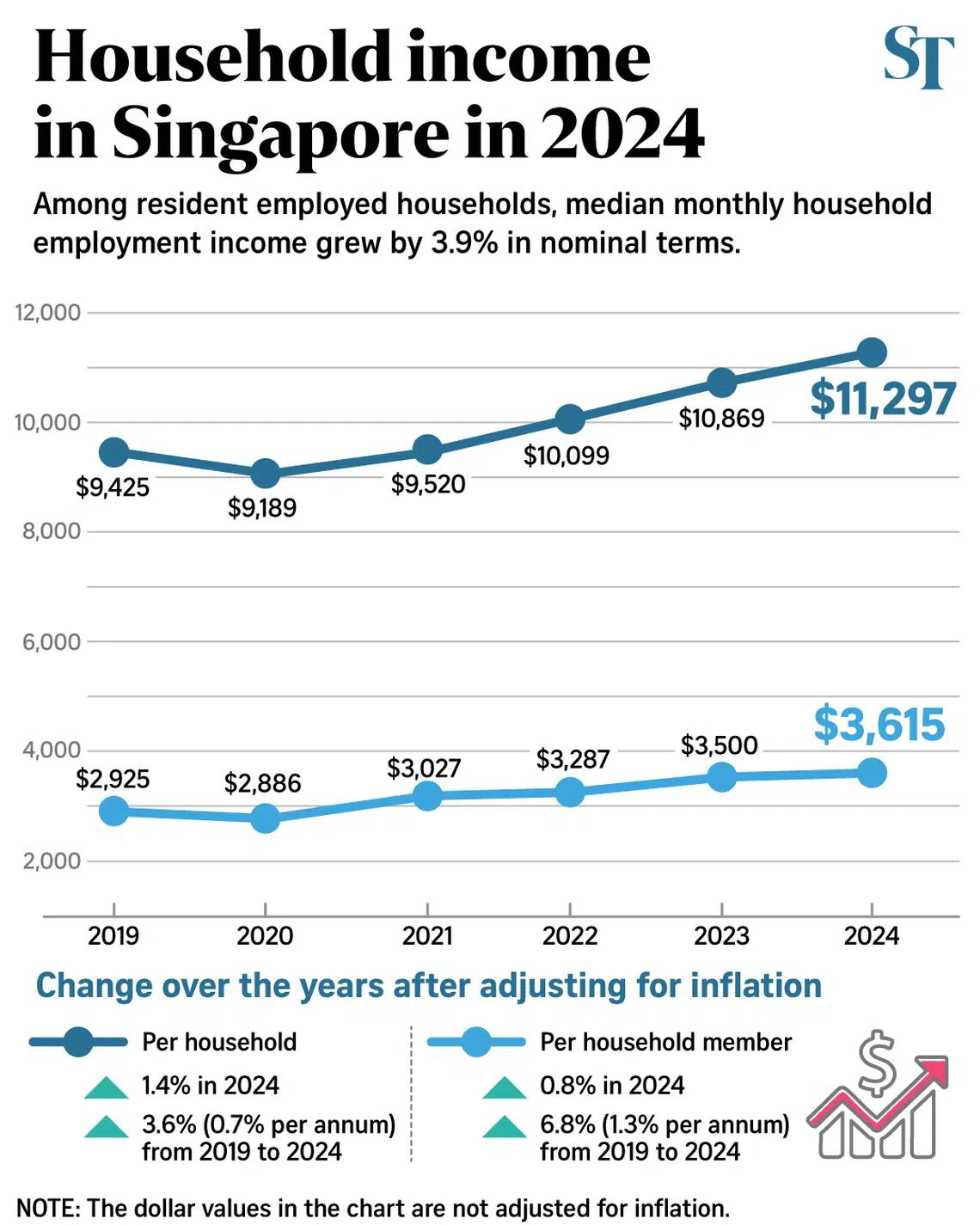
- Median monthly household income from work (resident employed households) was S$11,297 in 2024, up from S$10,869 in 2023 (and +1.4% in real terms after inflation).
- Adjusted for household size, median income per household member was S$3,615 in 2024.
- Households spent S$5,931 a month on average in 2023, up from S$5,163 in 2017/18.
This is why many people feel like they’re running hard just to stay in place.
A CNA commentary also notes: “More than 40% of Singaporeans think that they would never achieve financial freedom.”
And the emotional side is real. A Straits Times interview quote captured the mindset trap: “I often felt like money was never enough. Whatever I earned, I spent.”
The “$75,000 rule” is famous — and often misunderstood
The old headline was about ~US$75k (from the Kahneman–Deaton work).
Kahneman later added an important nuance: “$75,000 is the sufficiency point in the most expensive places.”
Singapore is absolutely in the “expensive places” bucket—so if you try to import a foreign “enough number” directly, it can mislead.
What matters more is your personal circumstances:
- do you have kids (or plan to)?
- do you support parents?
- is housing already stable (owned vs renting, mortgage size)?
- do you need a car for work/family?
- what does “retirement” mean for you?
What “enough” really means in the Singapore context?
1) Enough for Safety

This is the stage where money has the biggest returns.
You’re aiming for:
- a buffer against job shocks and medical surprises
- no high-interest debt spiral
- basic protection (insurance basics + realistic emergency savings)
When you don’t have Safety, money feels like oxygen.
2) Enough for Stability
This is “my life works, month after month.”
You can:
- pay for normal living without dread
- handle common surprises without panic
- keep long-term plans moving (education, housing upgrades, retirement)
Singapore-specific reality: many families don’t only budget for themselves; there’s often a “family system” (kids/parents) baked in.
3) Enough for Freedom

This is where money starts buying your most precious asset: choice.
Freedom looks like:
- being able to say “no” to a bad job/client
- taking a break without fear
- choosing time over status upgrades
This is why some newer research finds money does help: it buys control over your life, not just nicer things.
BTW – we share commentary on Singapore Investments every week, so do join our Telegram Channel (or Telegram Group), Facebook and Instagram to stay up to date!
Financial Horse also share great tips on Twitter.
Don’t forget to sign up for our free weekly newsletter too!
A quick “enough” test you can do tonight
Answer these honestly:
- If your income stopped for 6 months, would you be okay? (Safety)
- Do you feel calm about your normal monthly spending? (Stability)
- Can you make a major life choice without money being the main blocker? (Freedom)
If you’re strong on all three, you’re probably near “enough.”
If not, “more money” may still have high returns—but only if it targets the gap you actually have.
The Singapore “goalpost problem” (5Cs?)
The “Five Cs of Singapore”—namely, cash, car, credit card, condominium and country club can make retirement elusive even as you continually “upgrade” through life.
“Enough” gets blurry because Singapore offers endless ladders:
- HDB → condo → bigger condo → landed
- occasional Grab → daily Grab → car (then COE stress becomes a lifestyle tax)
- one enrichment class → a timetable full of classes
- quiet wealth → visible consumption
You can end up earning more while feeling the same.
A good counter-rule is:
Only chase “more” if it buys Safety or Freedom. Be careful when it mainly buys status.
A small, concrete way to put a number on it
You can define “enough” through a safety net retirement lense.
A CPF example shows how planners translate lifestyle into a monthly target: “I would need about S$2,530 a month… I set my retirement income goal at S$3,000 a month.”
You can do the same for today:
- Essentials-only month (your Safety monthly number)
- Comfortable month (your Stability number)
- Comfortable + choices (your Freedom number)
Then “enough” becomes: which month are you trying to permanently afford? And which range keeps you in a comfortable state of mind?
Singapore is “rich” … but happiness isn’t just GDP
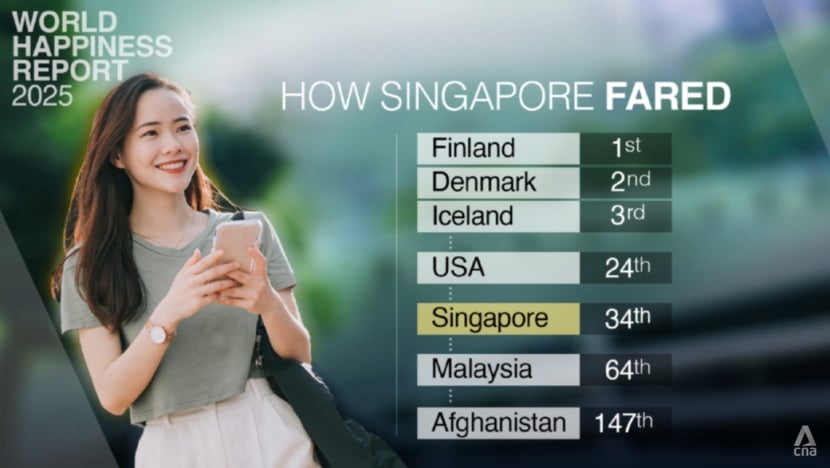
Singapore ranked 34th in the World Happiness Report 2025 (score 6.565).
Which reminds us that high income and high efficiency don’t automatically translate into peace.
Connection, purpose and well being matter a lot.
Health is wealth! And at the end of the day, if you have no one to share it with, what’s the purpose.
So always go back to your value system and make meaningful choices with your money.
I say, money is not tool for consumption, but for freedom.
I live(d) under my possibilities, depending on the country I am in, I need between 10 and 20% of income for the basics (no repairs, travels or migration costs). Unfortunately Sg banks like to freeze accounts, when my moves become too exotic. They want the verification of the verification and esp. so called international banks have no clue about an outside Singapore life. The mindset is as if we all live under equal systems. Nobody believes what I say; Singapore treats everything as a possible lie. This was very different ten years ago.
But when I enter a new country, I do not know, what I will find there. “Send me a government letter with your name and address!” Right, and how should my government know where I live? These things are in Singapore not inside of any imagination – so from my outside view, I have to explain a lot. And I must understand, where the problem in the thinking sits. They dial the old number to verify that me is me, but I left the country, how can I still have the old number? In Europe they say my address is too long. “Shorten it! You may use 50 letters max.” In Singapore they then say: “This address is not the same address!” 🙂
Financial freedom, as Madame Contributor it sees, is about wealth, but it is as well about (mis)trust. When banks freeze accounts for no reason… I lost my debit card, which I need to live off. Millions in Singapore are no garanty for avoiding hunger elsewhere. Counting financial freedom in $ is not enough!
A migrating process: Give papers to a country, till I have my ID card, is two to six months. The address change in a bank can take the same time even after decades of relationship.
In addition we live in times without “men”. Ever since I started my worklife, I needed to make decisions. When I ride my bike, I need to make decisions. Quick ones please and accurate if possible. We had no handy, no online, no nothing, it was me alone in my outpost. It came a moment when I needed to make a huge order without any backup. I was so afraid!! Today they would fire me, but in those days I was promoted.
Freedom means to be surrounded by trust and competence. Both are gone! Any bank email I receive today has been sent in copy to another handful of people. Why? Because my officer has no competence in her bank. She cannot make decisions. She cannot unfreeze my account as this: “…happens for my security!”
Am I happy when a bank separates me from my assets? When her people’s incompetence comes over to me and forces me into incompetence as well?
—
“What our generation has forgotten is that the system of private property is the most important guarantee of freedom, not only for those who own property, but scarcely less for those who do not. It is only because the control of the means of production is divided among many people acting independently that nobody has complete power over us, that we as individuals can decide what to do with ourselves.” — Friedrich von Hayek
—
I enjoyed your text, Madame. Many thanks.