One afternoon in 1988, Cher was rehearsing in a Los Angeles recording studio when a man with wild hair, a stern face, and biker gear showed up.
His name was Richard Stark.
He was not carrying a polished luxury pitch deck. He was not backed by a French conglomerate. He was not trying to sell a handbag to department-store buyers.
He had leather.
He had silver.
He had a Harley.
And he had a strange idea: motorcycle gear did not have to be cheap, flimsy, or disposable. It could be heavy, overbuilt, beautiful, expensive, and dangerous-looking at the same time.
That idea became Chrome Hearts.
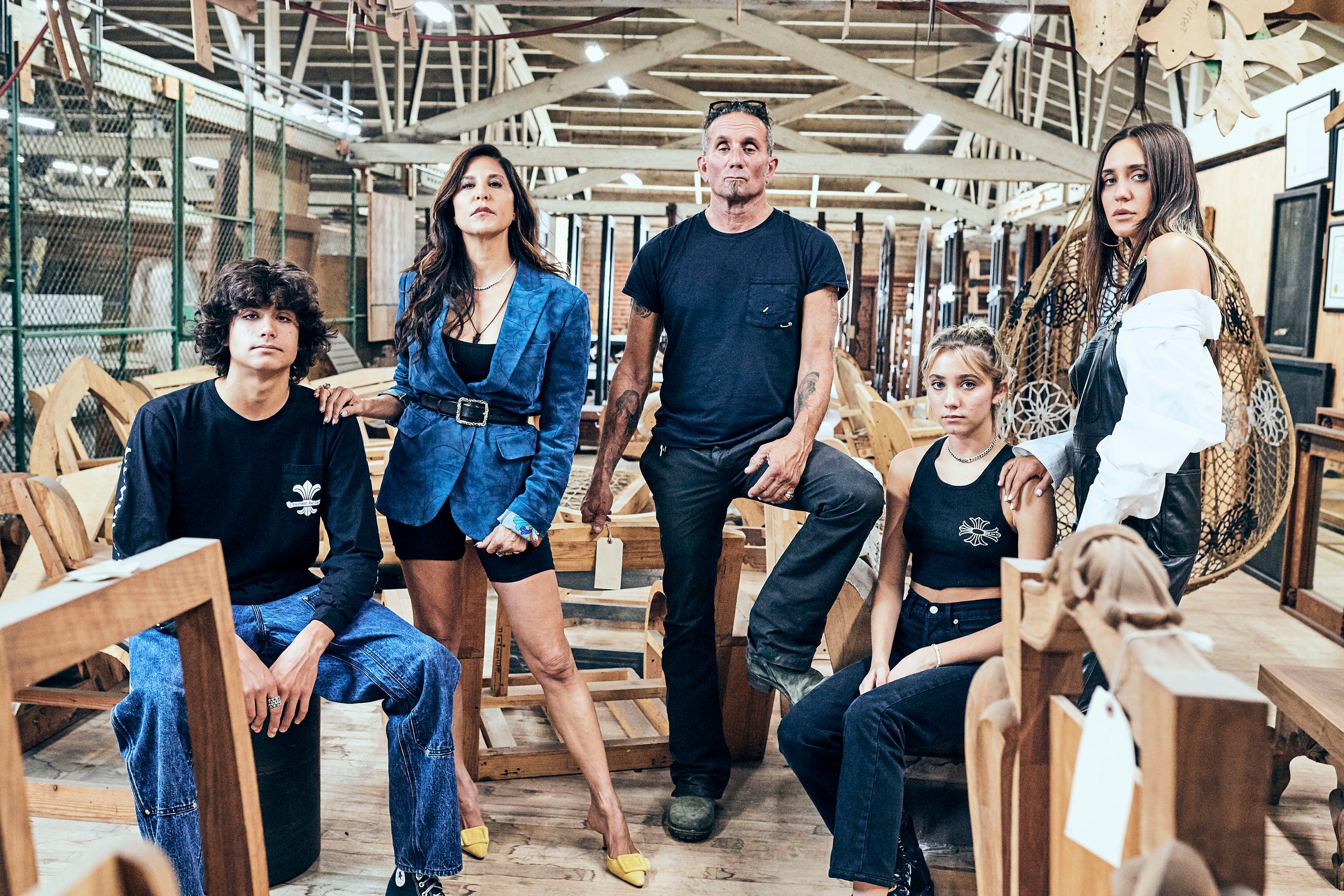
Today, Chrome Hearts sells sterling-silver rings, leather jackets, eyewear, jeans, hoodies, furniture, incense, tableware, baby strollers, custom interiors, and strange luxury objects that look like they were invented in a Hollywood workshop after midnight.
The brand is loved by rock stars, rappers, stylists, athletes, fashion insiders, and collectors who treat its jewellery and denim like cultural trophies.
This article was written by a Financial Horse Contributor.
The biker jacket that could get you into Spago
Chrome Hearts began in Los Angeles in 1988, founded by Richard Stark, John Bowman, and Leonard Kamhout. Stark came from the leather world, Bowman was involved in production, and Kamhout brought the silversmithing element.
The original product was not runway fashion. It was leather motorcycle gear for bikers and rock stars. GQ describes Stark riding around town, selling the pieces the old way: by showing up and getting famous people to notice.
The early jackets were made from thick hides and finished with custom sterling-silver hardware: studs, zipper pulls, biker crosses, heavy details that turned a jacket into armour. GQ’s best line is that a Chrome Hearts jacket could protect you on a motorcycle and still get you into Spago. That is the whole brand in one image: road rash and Hollywood access in the same garment.
Hermès came from saddles.
Louis Vuitton came from trunks.
Chanel came from couture.
Chrome Hearts came from motorcycles, silver hardware, rock stars, and Los Angeles nerve.
Cher understood it before the fashion industry did
Chrome Hearts’ first great celebrity was not a paid face of the brand.
It was Cher.
That matters. A normal brand pays celebrities to borrow credibility. Chrome Hearts built credibility because celebrities seemed to discover it before the mainstream luxury customer did. GQ places Cher in the early origin story, with Stark turning up in a recording studio while she was rehearsing.
The family business that refuses to behave
The next reason Chrome Hearts is expensive is that the company does not behave like a normal company.
Richard Stark and Laurie Lynn Stark built the brand into a family-controlled luxury business. Vogue describes the company as driven by the artistic whims of Richard and Laurie Lynn, and tells the almost absurd story of their teenage son Kristian suggesting a St. Barts store while the family was on holiday — and Richard effectively telling him to go do it.
Chrome Hearts is not run like a clean corporate machine. It is run more like a family-controlled creative compound. Laurie Lynn’s mother, brother, nephew, and the Stark children are all woven into the broader operating world, according to Vogue. The business teaches jewellery making, furniture carving, cut-and-sew, and 3D rendering to workers inside its own system.
That is rare at this scale.
Most luxury brands want control, but also scalability. Chrome Hearts seems to want control even when it makes the business less convenient. That stubbornness is part of the price.
The customer is not just buying a hoodie or a ring. The customer is buying into a brand that feels like it still has a private owner’s taste, not a spreadsheet’s taste.
Chrome Hearts is not expensive because the raw silver is worth that much. It is expensive because the silver is part of a complete system: the cross, the dagger, the leather, the Gothic script, the store experience, the celebrity mythology, and the feeling that you got something not everyone can get.
Vogue describes Chrome Hearts’ sprawling LA factory world as a place where products are made, stored, developed, and sometimes held back until their moment. Richard Stark’s approach is not to chase trends or meet retailer calendars. The brand makes what it wants, when it wants.
That is why Chrome Hearts can make a ring, a sofa, a pair of glasses, a baby stroller, a lemon squeezer, and a pair of jeans without feeling like it has lost the plot.
The object changes.
The world stays the same.
Everything looks contaminated by the same code: black leather, heavy silver, crosses, fleur-de-lis, daggers, Gothic lettering, dark wood, biker hardware.

The genius of making it hard to buy
Chrome Hearts is expensive partly because it is annoying to buy.
That sounds like a criticism. It is actually one of the smartest parts of the business.
Vogue reports that, apart from a small fragrance range, new Chrome Hearts designs cannot be bought online. To buy the important stuff — silver-accessorised jeans, leather furniture, rings, hoodies, odd objects — customers generally have to go to one of the brand’s stores or selected retailers.
This creates three forms of scarcity:
| Scarcity type | How Chrome Hearts uses it |
|---|---|
| Product scarcity | Limited runs, store exclusives, custom pieces, inconsistent availability |
| Information scarcity | You cannot easily browse the full catalogue online |
| Relationship scarcity | Better clients often get better access |
This is why Chrome Hearts resale can get insane. Vogue noted a pair of checkerboard leather jeans custom-made for Offset listed on Grailed for US$81,000, alongside other pieces with eye-watering resale prices.
That resale premium is not just about denim.
It is an accessability tax.
The celebrity machine that does not look like a machine
Chrome Hearts has one of the best celebrity networks in luxury because it does not feel like normal endorsement.
The old world was rock: Cher, Lou Reed, and the biker-musician scene.
The new world is fashion, hip-hop, athletes, and internet-era style: Jay-Z, Rihanna, Drake, Zoë Kravitz, Billie Eilish, The Weeknd.
But the key is not just that celebrities wear Chrome Hearts.
It is that they often seem to commission it, customise it, collect it, and live inside it.
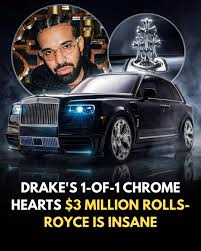
Drake is the best modern example. He worked with Chrome Hearts on a one-of-one Rolls-Royce Cullinan, with a related clothing collection sold exclusively through Chrome Hearts Miami. GQ described the car as a deeply customised project that took more than a year and carried the brand’s visual code into the vehicle itself.
That is the top of the Chrome Hearts pyramid.
Not “I bought a ring.”
Not “I bought a hoodie.”
But “I turned my car into a Chrome Hearts object.”
Once a brand can do that, regular products become souvenirs from a much bigger mythology.
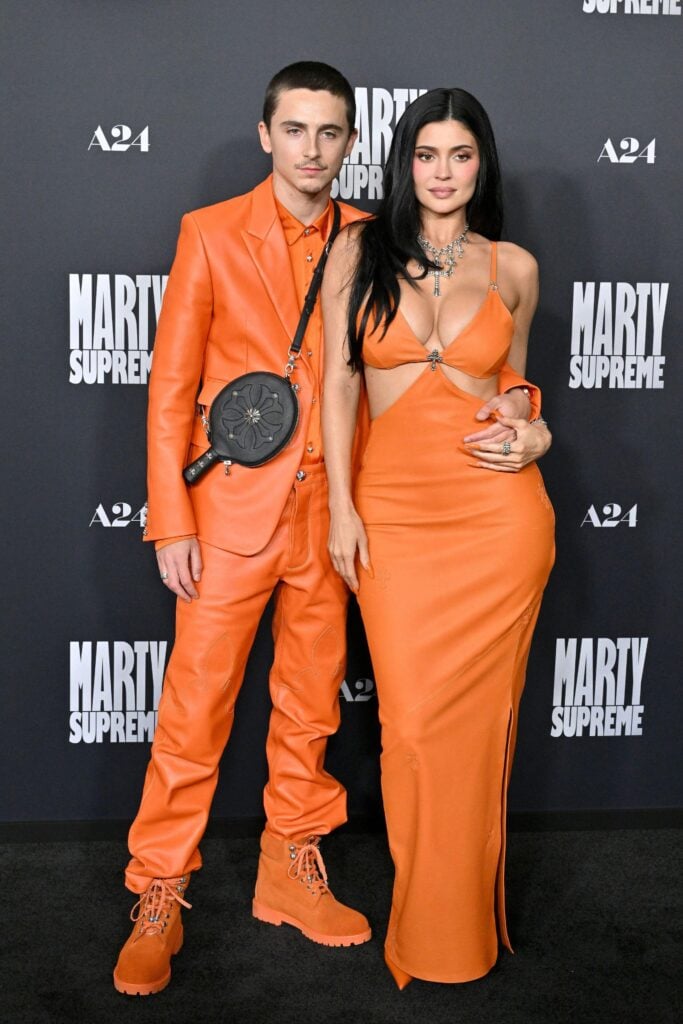
At the Marty Supreme Los Angeles premiere in December 2025, Kylie and Timothée Chalamet wore matching custom orange Chrome Hearts looks — a full celebrity-couple fashion moment that Vogue called “Instagram baddie” Chrome Hearts energy. GQ framed it as maximalist, high-visibility couple style.
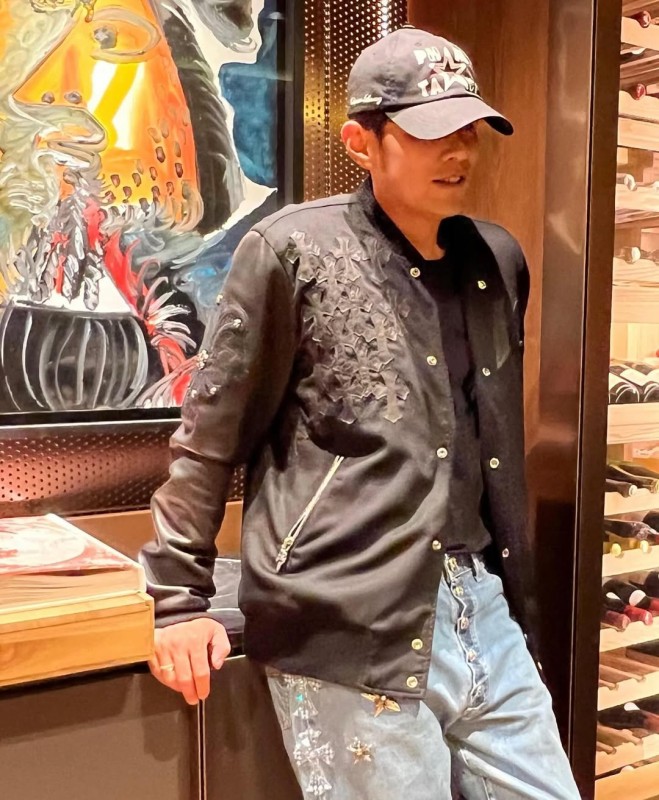
In Asia, few celebrities wear Chrome Hearts with more authority than Jay Chou.
This is not a casual endorsement. Jay has been seen in Chrome Hearts glasses, jewellery, denim and outerwear, and has even visited the brand’s factory and founder’s office. More recently, fans noticed him wearing a rare Chrome Hearts city-limited denim piece reportedly priced in the six-figure range, along with diamond-heavy Chrome Hearts jewellery at public events.
That is the genius of Chrome Hearts. On most people, it is expensive jewellery. On Jay Chou, it becomes part of the mythology: musician, magician, collector, streetwear king.
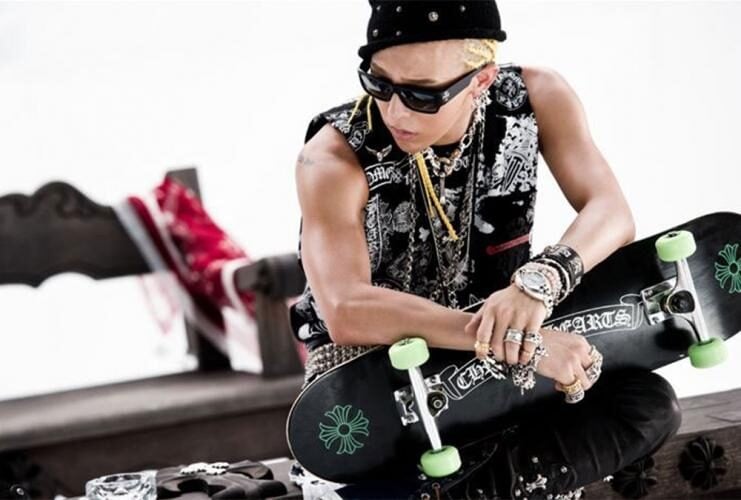
Chrome Hearts — G-Dragon made it K-pop royalty
Before Chrome Hearts became a global hypebeast trophy, G-Dragon was already wearing it like stage armour. Vogue Singapore notes that he has worn numerous Chrome Hearts pieces throughout his career, from caps to jewellery, folding its gothic crosses and silver-heavy attitude into the visual language of BIGBANG-era K-pop.
Jay Chou makes Chrome Hearts feel like private-collector luxury. G-Dragon makes it feel like pop-star rebellion.
Karl Lagerfeld gave it European luxury legitimacy
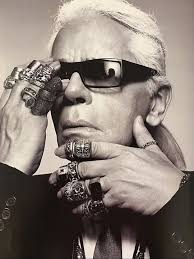
The most revealing Chrome Hearts fan may be Karl Lagerfeld.
Lagerfeld was not simply a celebrity. He was European fashion power: Chanel, Fendi, personal uniform, black glasses, white hair, high collar, total image control.
GQ has described Lagerfeld as one of Chrome Hearts’ great collectors, with a deep obsession that helped validate the brand in high-fashion circles.
That is important because Chrome Hearts could have stayed a Hollywood biker brand.
Lagerfeld helped make it legible to European luxury.
The symbolism is perfect: the man who represented polished fashion aristocracy became obsessed with a Los Angeles brand covered in Gothic crosses and biker silver.
That collision is Chrome Hearts.
Why the legal fights matter
A brand like Chrome Hearts lives and dies by its symbols.
The cross.
The horseshoe.
The dagger.
The Gothic lettering.
The cemetery patch.
These are not just decorations. They are source codes. If everyone copies them freely, the magic weakens.
That is why Chrome Hearts fights.
In 2024, Chrome Hearts sued Fashion Nova, alleging that the fast-fashion company copied a custom look made for Kim Kardashian using Chrome Hearts’ trademark-protected cross logos and related embellishments.
Then came an even stranger fight: Neil Young.
In 2025, Reuters reported that Chrome Hearts sued Neil Young and his band, also called the Chrome Hearts, claiming trademark infringement and arguing that the band name and merchandise could confuse consumers because the fashion brand has collaborated with musicians including the Rolling Stones and Drake.
But it also shows how valuable the brand has become. The name is no longer just a cool phrase. It is an asset worth defending in federal court.
The LVMH rumour that says everything
Every serious independent luxury brand eventually attracts acquisition rumours.
In 2024, the fashion world briefly lit up with rumours that LVMH had acquired Chrome Hearts. Puck later reported that the story was untrue — essentially an April Fools’ joke that ran too far — but also noted why people believed it so quickly: Chrome Hearts would make strategic sense for LVMH. It is vertically integrated, much of its product is made in the U.S., and it gives LVMH something most European luxury houses struggle to buy: authentic American edge.
The Financial Times reported in 2024 that Chrome Hearts remained independent and privately owned, and that Richard Stark was not really interested in a buyout.
That independence is central to the brand’s appeal.
That is why the LVMH rumour works so well as lore. It tells you how valuable Chrome Hearts has become — but also why selling could damage the very thing buyers want.
The real price stack
At the raw-material level, many Chrome Hearts prices look irrational.
They are not buying silver by weight.
They are buying an invitation into a world that feels expensive before you even see the price tag.
Never miss a post! Follow Financial Horse by subscribing or following us on your favorite platform:
Subscribe to our mailing list for exclusive content straight to your inbox:
Why Chrome Hearts works in 2026
Chrome Hearts works because modern luxury has a problem.
Too many brands have become too available, too expensive, too logo-heavy, and too obviously managed. Customers can sense when a brand is mostly pricing power and marketing budget.
Chrome Hearts is also expensive. It is also a brand. It also benefits from hype.
But it feels different because it still has friction.
You cannot fully shop it online.
You cannot easily see everything.
You cannot always buy what you want.
You cannot reduce it to one product category.
You cannot quite tell whether it is fashion, jewellery, furniture, streetwear, rock merch, or private-club uniform.
That confusion is the moat.
Chrome Hearts is visually loud, but commercially secretive.
The final take
Chrome Hearts is expensive because it sits at the intersection of four things that rarely come together:
craft.
scarcity.
celebrity mythology.
independence.
Many brands have one. Some have two. Very few have all four.
Hermès sells aristocratic patience.
Rolex sells allocation and achievement.
Loro Piana sells invisible wealth.
Chrome Hearts sells Hollywood biker aristocracy.
It is not quiet luxury in the beige-cashmere sense. Nothing about Chrome Hearts is visually quiet. The crosses, leather, silver, Gothic letters, and biker hardware are loud.
But the business is quiet.
No normal e-commerce.
Limited visibility.
Family control.
Hidden workshops.
Strange products.
Custom access.
Celebrities who do not just wear it, but seem to join it.
That is why the prices hold.
It is expensive because it makes luxury feel like contraband: difficult to find, difficult to decode, slightly dangerous, and protected by a mythology that money alone cannot fully buy.
Chrome Hearts is what happens when a biker workshop becomes a luxury house without ever admitting it became a luxury house.