Wealth planning sounds like something only billionaires need.
That is the first mistake.
The rich may have more assets, more advisers, and more complicated estates. But the basic problems are the same for ordinary families.
The famous cases are useful because they show what happens when wealth planning fails at scale.
The names are glamorous.
The mistakes are painfully ordinary.

This article was written by a Financial Horse Contributor.
The most common wealth planning mistake: thinking “I’ll deal with it later”
Most people do not avoid wealth planning because they are foolish.
They avoid it because it feels uncomfortable.
Nobody wants to think about death.
Nobody wants to rank beneficiaries.
Nobody wants to discuss family conflict.
Nobody wants to decide who should control the money.
Nobody wants to admit that their children, siblings, spouse, or relatives may fight.
So they delay.
But wealth planning is not really about death.
It is about reducing the burden on the people left behind.
A good wealth plan does not just transfer assets. It prevents confusion, forced sales, and family disputes.
The lesson from famous estate battles is simple:
The cost of planning is small.
The cost of not planning can be enormous.
Prince — no will, no control
Prince died in 2016 without a known will. Court filings opened probate, and because no will was found, the process had to determine his legal heirs and administer a complex estate involving music rights, real estate, business interests, and valuable intellectual property. Reports noted that his siblings and half-siblings became the relevant heirs under the intestacy process.
This is the cleanest example of a basic mistake.
Prince had immense creative control during his lifetime.
But after death, the law took over.
That is what intestacy means. If you do not make your wishes legally clear, the default rules decide for you.
And default rules are blunt.
They do not understand who you were close to.
They do not know which relatives were estranged.
They do not know which family member made sacrifices.
They do not know which charity mattered to you.
They do not know how your business or creative legacy should be managed.
They simply apply the law.
Lesson: no will means no control.
Singapore takeaway
In Singapore, CPF savings are not covered by a will and are not part of the estate. CPF savings require a CPF nomination; without one, they are distributed through the Public Trustee according to intestacy rules or Muslim inheritance rules.
So the Singapore lesson is even sharper:
A will is necessary.
But a will is not enough.
For many Singaporeans, meaningful wealth may sit in CPF, HDB/private property, insurance policies, brokerage accounts, SRS, bank accounts, and foreign shares. These do not all move in the same way.
If you only write a will but ignore CPF nomination, insurance nominations, and property ownership structure, your estate plan may still fail.
Aretha Franklin — unclear documents create family fights
Aretha Franklin did leave written documents. The problem was that they were messy.
After her death, multiple handwritten documents were found, including a 2014 handwritten will discovered in a notebook under couch cushions. A Michigan jury later ruled that the 2014 document was valid, after years of dispute among her sons.
This is a different kind of failure.
It was not total absence of planning.
It was unclear planning.
That can be almost as bad.
A will that is hard to find, hard to read, inconsistent with earlier documents, or vague in its instructions invites litigation. Once beneficiaries have different financial incentives, every unclear sentence becomes a battlefield.
Lesson: a messy will is an invitation to fight.
Singapore takeaway
A proper will should be planned and accounted for with a lawyer covering:
Who gets what.
Who acts as executor.
Who becomes guardian of minor children.
What happens if a beneficiary dies before you.
Whether specific assets should be sold, transferred, or held.
How estate expenses, debts, funeral expenses, and taxes are paid.
And just as important: your executor must know where the original signed will is kept.
It is good practice to keep the original signed will with the lawyer or a proper custody service. Then record the location in SAL Wills Registry and/or My Legacy Vault, and tell your executor: “The original will is held by [law firm/name], contact [person/email/phone].”

Kobe Bryant — even a good plan can become outdated
Kobe Bryant had estate planning in place, including a family trust. The problem was maintenance. His youngest daughter, Capri, had not yet been added to the family trust when he died, and his widow had to petition the Los Angeles court to amend the trust.
Sophisticated planning can still fail if it is not updated.
Estate planning is not a one-time exercise.
It is a living system.
You get married.
You have children.
You divorce.
You buy property.
You sell a business.
You move countries.
Your wealth grows.
A beneficiary dies.
An executor becomes unsuitable.
A family relationship breaks down.
If your documents do not change, your plan goes awry.
Lesson: an outdated plan is a hidden risk.
Singapore takeaway
Review your wealth plan after every major life event.
Marriage.
Divorce.
Birth of a child.
Death of a nominee or beneficiary.
Buying or selling property.
Starting or selling a business.
Receiving a major inheritance.
Moving overseas.
Large portfolio growth.
CPF is especially important. CPF savings need a CPF nomination if you want them distributed according to your wishes.
Practical rule: Every time you update your will, also check your CPF nomination, insurance nominations, property ownership, and LPA.
Do not update one piece and forget the rest.
James Gandolfini — a will alone may not preserve wealth
James Gandolfini reportedly had an estate worth around US$70 million. His will distributed assets to family members, but estate-planning commentary has highlighted that the structure left a large portion of the estate exposed to federal and state estate taxes, with reports citing tax exposure of around 55% on much of the estate.
The mistake was not that he had no will.
The mistake was thinking a will alone was enough.
A will says who receives the assets.
It does not automatically solve tax planning, liquidity, foreign assets, family governance, creditor issues, or forced-sale risk.
For wealthy families, the real question is not just:
“Who gets what?”
It is also:
How much tax leakage is there?
Will the family have cash to pay expenses?
Will assets need to be sold quickly?
Are there foreign estate taxes?
Are there business partners or minority shareholders?
Can the family retain control of key assets?
Are the beneficiaries capable of managing the inheritance?
A will transfers wealth, but it does not automatically preserve wealth.
Singapore takeaway
Singapore abolished estate duty for deaths on and after 15 February 2008.
So the Singapore problem is not usually Singapore estate duty.
The bigger risk is foreign assets.
Many Singapore investors own US-listed stocks, US ETFs, US property, or other US-situs assets. The IRS states that the executor of a non-resident, non-US citizen must file Form 706-NA if the fair market value of the deceased’s US-situated assets exceeds US$60,000.
That does not mean every Singapore investor will definitely suffer estate tax in every case. The actual outcome depends on asset type, structure, treaty position, deductions, and planning.
But it does mean this:
Do not assume “Singapore has no estate duty” means “there is no estate tax issue”.
Picasso — complex assets need governance, not just distribution
Pablo Picasso left behind an enormous body of work and a complicated artistic legacy. His estate involved not just money, but art, authentication, licensing, rights, family control, and long-term commercial value. Vanity Fair described the resulting inheritance as a multi-billion-dollar empire involving multiple heirs and continuing complexity.
This is the hard-asset problem.
Some assets are easy to divide.
Cash is easy.
Listed shares are easy.
A bank account is easy.
But other assets are not.
A family business.
Private company shares.
Art.
Jewellery.
Watches.
Intellectual property.
Crypto.
Investment property.
Royalties.
Founder shares.
Digital content.
A personal brand.
“Split equally among the children” sounds fair, but may be impossible in practice.
What if one child wants to sell and another wants to hold?
What if one child runs the business and the others do not?
What if an asset cannot be easily valued?
What if selling destroys long-term value?
What if beneficiaries disagree on who should control it?
Lesson: complex assets need rules of control, not just a list of beneficiaries.
Singapore takeaway
If you own a business, private shares, concentrated stock position, investment property, crypto, art, or digital assets, your estate plan should answer:
Who controls the asset after death?
Who values it?
Can it be sold?
Must it be held?
Can beneficiaries force a sale?
Is there a buy-sell agreement?
Is there keyman insurance?
Who has access to accounts and passwords?
Can your executor actually manage the asset?
A weak plan says: “Everything to my family equally.”
A better plan says: “This is how each asset should be managed, valued, transferred, sold, or retained.”
Marlon Brando — verbal promises are dangerous
Marlon Brando reportedly had estate-planning documents, but disputes arose over alleged oral promises, including claims involving a long-term housekeeper. Oral promises should be captured in completed legal documents if they are intended to be binding.
This happens in ordinary families all the time.
“Don’t worry, this house will be yours.”
“I will take care of you.”
“Your siblings know what I mean.”
“You can stay here forever.”
“This account is really for you.”
“You helped me, so I will compensate you later.”
The problem is that after death, incentives change.
Memory becomes selective.
Documents matter.
Lesson: if it matters, document it.
Singapore takeaway
This is especially relevant for family homes and joint accounts.
Common danger zones:
A child pays for renovations but does not own the property.
Parents promise the flat to one child but never document it.
One sibling acts as caregiver and expects a larger share.
A parent adds a child as joint account holder for convenience.
A family member works in the business for low pay based on future promises.
A couple buys property without understanding joint tenancy versus tenancy-in-common.
Assets can pass through different mechanisms, including probate, joint ownership, insurance nomination, and CPF nomination.
That means the paperwork can override the family story.
Do not rely on “everyone knows what I intended”.
After death, everyone may remember differently.
The pattern behind all these mistakes
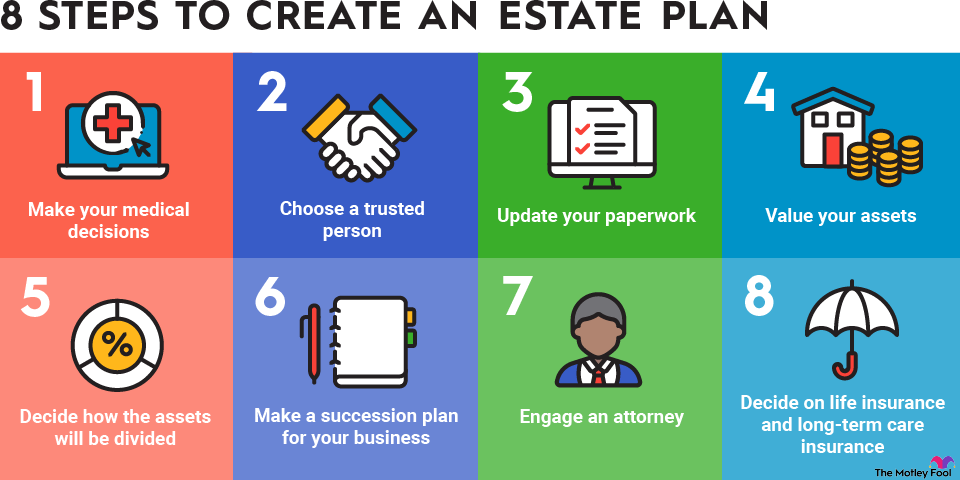
The mistakes look different, but the pattern is the same.
The common thread is not stupidity.
It is avoidance.
People delay because the topic is uncomfortable.
But the result is that their families inherit uncertainty.
The Singapore wealth planning checklist
For Singapore families, a practical wealth plan should cover at least seven things.
1. Make a will
A will gives instructions on how your estate should be distributed after death. To avoid any issues, it is best to execute your will with a lawyer.
At minimum, your will should deal with:
Executors.
Beneficiaries.
Guardians for minor children.
Specific gifts.
Residual estate.
Backup beneficiaries.
Powers to sell or retain assets.
2. Make a CPF nomination
CPF is not distributed under your will. If you want your CPF savings distributed according to your wishes, make a CPF nomination. Without one, distribution goes through default rules and may take longer.
3. Review insurance nominations
Life insurance proceeds may not necessarily follow your will if there is a valid nomination.
Check:
Term insurance.
Whole life policies.
Investment-linked policies.
DPS.
Group insurance.
Employer benefits.
Mortgage insurance.
Do not assume everything goes through your will.
4. Check property ownership
For property, ownership form matters.
Joint tenancy and tenancy-in-common can produce very different outcomes. In broad terms, joint tenancy usually passes to the surviving joint owner by survivorship, while tenancy-in-common allows a person’s share to pass through their estate.
This is especially important for HDB flats, private property, second properties, blended families, and parent-child co-ownership.
5. Make a Lasting Power of Attorney
A will deals with death.
An LPA deals with loss of mental capacity while you are still alive.
Singapore’s Office of the Public Guardian explains that an LPA lets a person aged 21 or older appoint donees to make decisions and act on their behalf if they lose mental capacity.
This is critical.
The bigger practical risk for many families may not be sudden death.
It may be stroke, dementia, accident, or illness where the person is alive but unable to make decisions.
6. Create an asset register
Your executor cannot administer what they cannot find.
Prepare a simple asset register covering:
Bank accounts.
Brokerage accounts.
CPF.
SRS.
Insurance policies.
Property.
Mortgages.
Loans.
Company shares.
Crypto wallets.
Safe deposit boxes.
Digital accounts.
Foreign assets.
Key advisers.
Important access instructions, stored securely.
Do not put passwords casually into an unsecured document.
But do make sure your executor knows how to locate the necessary information.
Never miss a post! Follow Financial Horse by subscribing or following us on your favorite platform:
Subscribe to our mailing list for exclusive content straight to your inbox:
7. Plan for liquidity
A family can be rich on paper and cash-poor in practice.
After death, the family may need money for:
Funeral expenses.
Mortgage payments.
School fees.
Helper salary.
Parents’ allowance.
Medical bills.
Legal fees.
Probate expenses.
Tax filings.
Daily living expenses.
If all the wealth is trapped in property, private shares, or illiquid assets, the family may be forced to sell at the wrong time.
The key question: are you leaving your family assets, or a puzzle?
A proper wealth plan should answer five questions clearly.
Who gets what?
Who controls what?
When do they receive it?
How do they access cash?
What happens if things go wrong?
If your family has to guess, litigate, or reconstruct your intentions from old conversations, the plan has failed.
Final thoughts
The famous cases are not really about celebrities.
They are about ordinary human avoidance.
Do not leave your family a puzzle.
Leave them instructions.
Wealth planning is not about being morbid.
It is about being kind to the people who will have to deal with everything when you cannot.