As Singapore navigates the complexities of a post-pandemic economy, there have been changes in the financial trends among households.
Let’s explore the shifts in income, spending, and investment behaviors over the past year.
This article was written by a Financial Horse Contributor.

1. Income Growth: Steady but Uneven
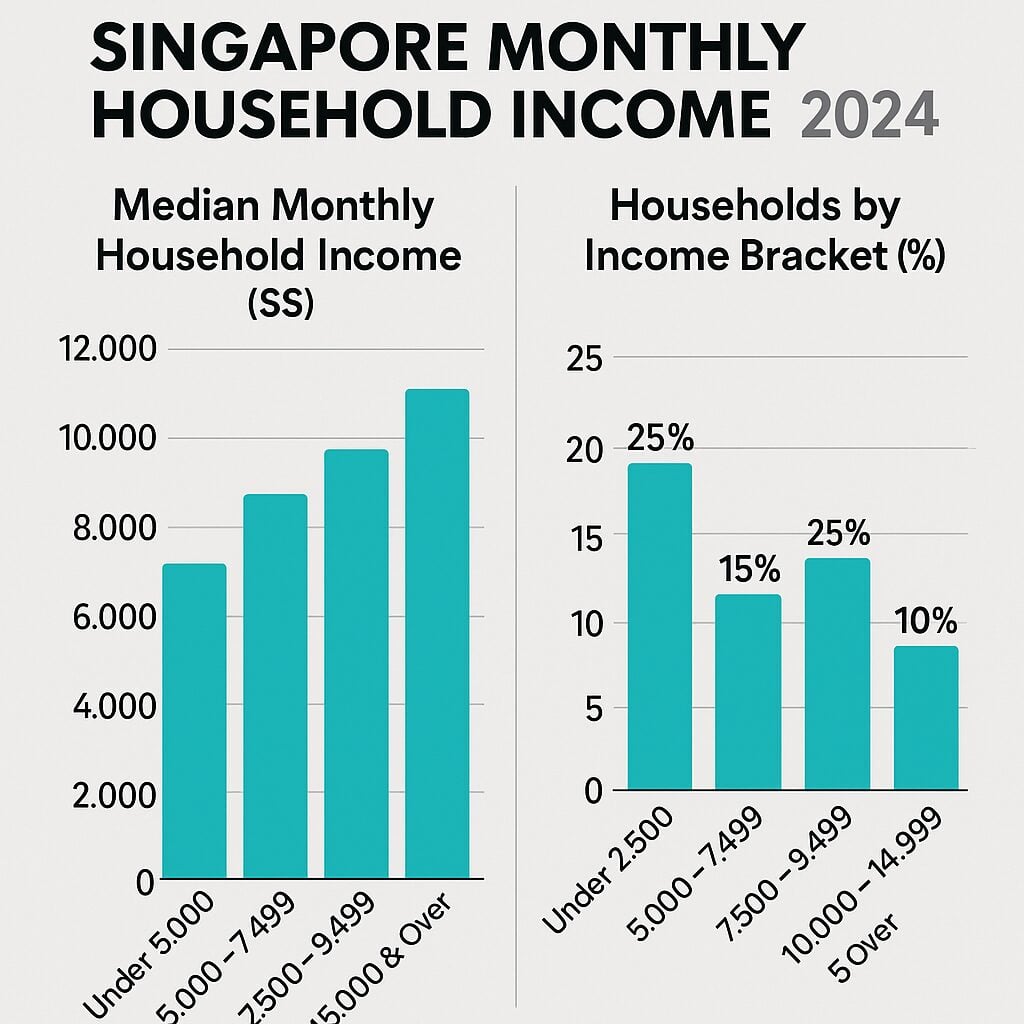
In 2024, the median monthly household employment income among resident employed households increased by 3.9% in nominal terms, reaching S$11,297.
After adjusting for inflation, this represents a real growth of 1.4%.
When considering household size, the median income per household member rose by 3.3% nominally to S$3,615, or 0.8% in real terms.
Notably, income growth was more pronounced in the lower nine income deciles, with real annual increases ranging from 0.3% to 1.9% between 2019 and 2024.
Conversely, the top decile experienced a real annual decline of 0.7% over the same period.

2. Spending Patterns: Rising Expenses Outpacing Income
A study by DBS Bank highlighted that, as of May 2023, the monthly expenses of its customers grew by 22.2% compared to the previous year, outpacing income growth of 11.1% in the same period.
Particularly concerning is the situation for the lowest-income group (earning below S$2,500), where expenses grew 13.8%, significantly outstripping their income growth of 2.5%.
This disparity has led to an increase in the expenses-to-income ratio, rising to 64% in May 2023 from 59% a year earlier.
The surge in spending is attributed to factors such as pent-up demand and inflationary pressures, with notable increases in transport (60.2%), discretionary spending (56.7%), and food (38.7%).

3. Investment and Net Worth: Growth Amid Challenges
Despite the challenges, Singaporean households have seen growth in net worth.
In Q1 2024, household net worth rose by 8% year-on-year to nearly S$2.9 trillion.
This increase is attributed to a 7.2% rise in total assets, including a 7.9% growth in residential property assets and a 6.7% increase in financial assets.
However, household liabilities also rose by 1.7% to S$364.8 billion, indicating a need for cautious financial planning.

BTW – we share commentary on Singapore Investments every week, so do join our Telegram Channel (or Telegram Group), Facebook and Instagram to stay up to date!
Financial Horse also share great tips on Twitter.
Don’t forget to sign up for our free weekly newsletter too!
4. Are we getting richer or poorer?

The data generally showcases a promising financial landscape for Singaporean households.
While income levels have generally risen, the pace of expense growth, especially among lower-income groups, poses sustainability concerns.
The increase in net worth suggests resilience, however the accompanying rise in liabilities highlights potential vulnerabilities.
For policymakers, these trends emphasize the importance of targeted support for vulnerable groups.
For households, the current environment calls for careful budgeting and strategic investments to continue asset growth.