Okay, I’ve had feedback from readers that you enjoy my yearly debriefs — where I share my investment returns, and break down my 3 biggest investment mistakes of the year.
So I figured: why not do a half-yearly version?
For the first 6 months of 2026, what were my investment returns? And more importantly — what were my 3 biggest investment mistakes?
Now writing this at the half-year mark does feel a little “wrong”.
The cutoff is arbitrary. End-year reviews feel more natural — the year is over, the returns are in, and it’s a good time to reflect on what worked and what didn’t.
Doing this in July feels premature.
In World Cup terms — this feels like evaluating your performance at half time, rather than when the game is over
So in that spirit, I’ll keep this relatively brief.
I’ll focus on the big wins, the big mistakes, and my game plan for the second half of 2026.
My investment returns in 2026 so far?
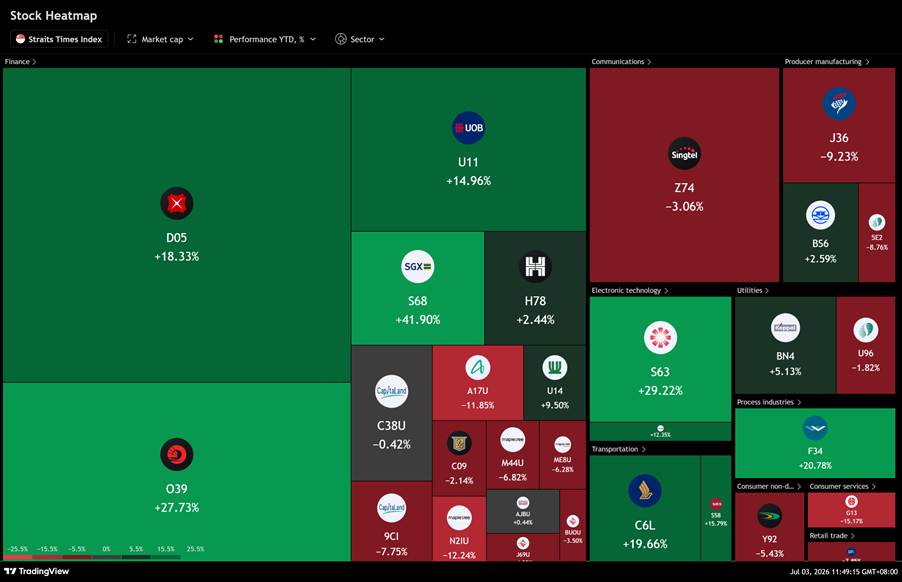
My portfolio investment returns for the first half of 2026 were approximately 15 – 20%.
During this period, the returns for the S&P 500 and STI were:
- S&P 500 – 10%
- STI – 12%
So viewed this way, I did outperform both the S&P 500 and STI ETF, although not by a wide margin.
And interestingly, a big chunk of those returns came around May / June.
From March – April I was actually trailing both the S&P 500 and STI, but some of my stock picks really came into their own over the last 2 months, which powered my returns ahead of the indexes.
And we’ll talk more about this later, but my biggest regret was trimming some of my AI positions right before the parabolic run.
Had I held onto those positions in the size I was holding in Jan 2026, I would probably be looking at 20-30% returns.
My 3 biggest investment mistakes in 2026 so far?
- Selling AI stocks too early
- Holding too much value vs growth
- Not sizing positions bigger during March / April
Selling AI stocks too early
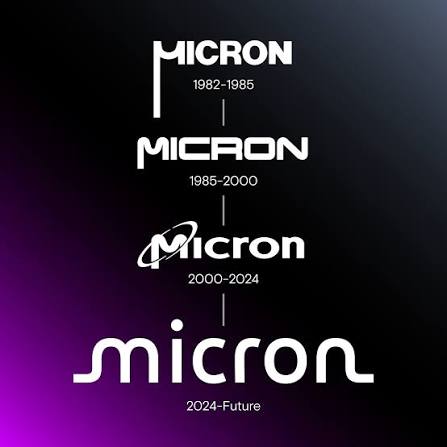
The best way to explain this is to tell you my experience with Micron.
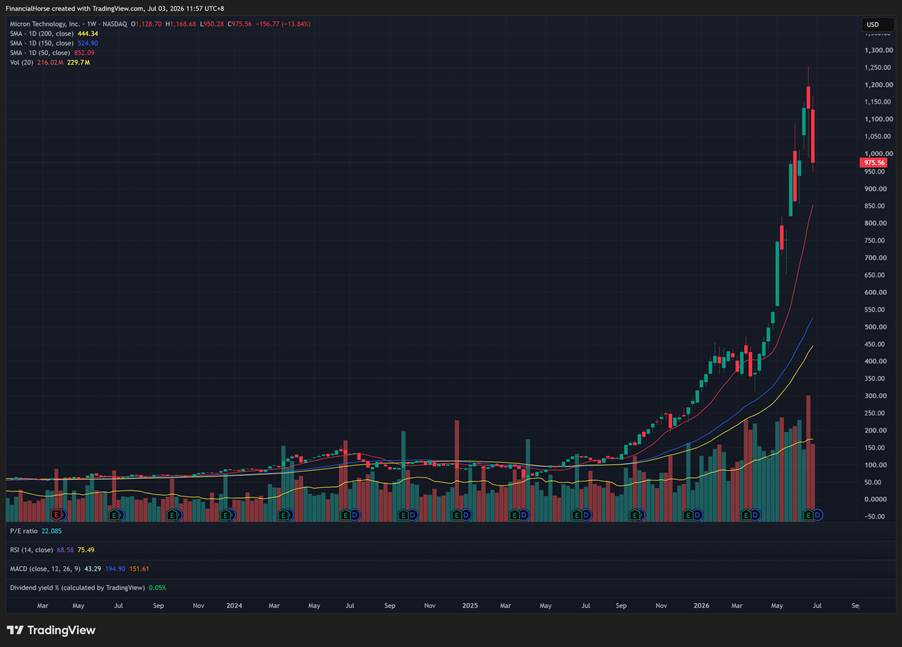
Now I first bought Micron in the $50s around 2022/2023, during the memory cycle bust.
Back then I didn’t know anything about AI, but I knew that memory is cyclical.
Whenever memory prices crash, the 3 memory players cut back on capex, reducing future supply – setting the stage for the next cyclical boom.
I didn’t know when it would happen, but I knew that buying Micron into a cyclical crash offered great risk-reward.
So then I held Micron and it went from $50 to $400 – an 8x return for me.
Every $10,000 I put into Micron became $80,000 – by which point I was getting pretty nervous.
I had held Micron into a previous memory cycle bust and lost >50% of my money, so I was all too familiar with the risks of holding onto a cyclical stock for too long.
So I took profit in half of my position, and thought to myself I would ride the other half either to $1000 or back to $50.
Then of course the Iran war came, and I was concerned about the impact of higher oil prices on the AI trade – so despite what I told myself previously, I sold the rest of the Micron position at $300-400.
Then of course, Micron kept going up.
At $500 I knew I was wrong for selling the position.
At $600 I was kicking myself.
And you know what – I had been here before, with NVIDIA.
So at $600 I decided to throw in the towel and I bought back the Micron position I had sold at $300+.
Did I feel stupid buying back a stock at $600, when I had sold it at $300 a month ago?
Absolutely.
Did that turn out to be the right decision in hindsight?
Absolutely.
I use Micron as an example, but this applied across the board to my AI positions.
The mistake was that I sold them too early, before the parabolic runup.
Had I not sold them, I would easily be looking at 20-30% portfolio returns in the first half of 2026.
What I did right though, was that I swallowed my pride and bought back certain positions much higher than the price I sold them for – and benefitted from the subsequent runup.
Holding too much value vs growth
The second mistake is somewhat ironic, because the first 2 trading days of July suggest that I may be right on this, but wrong on timing.
The mistake is essentially that I held too much value stocks vs growth stocks – too early.
In early 2026 I rotated quite heavily into non-AI names like Grab, Sea, UOB, OCBC etc., as I was concerned the AI bubble would eventually burst.
The problem with doing so was that I was sitting on a whole bunch of these “value” stocks that were going nowhere for 6 months.
While my AI stocks were going up 10% a day – day after day.
That meant a chunk of the portfolio was sitting in “lazy money” going nowhere, when it could be elsewhere delivering returns.
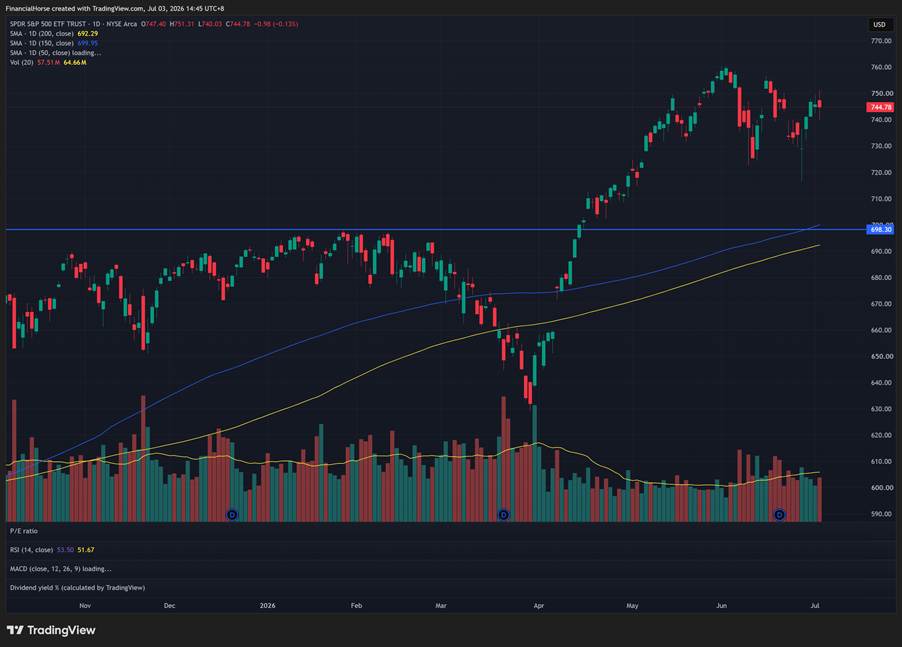
The irony of course, is that the first 2 trading days of July suggest this exact AI-into-value rotation is starting to play out.
Here is the 1-week performance of the S&P 500 – you can see early signs that this is playing out.
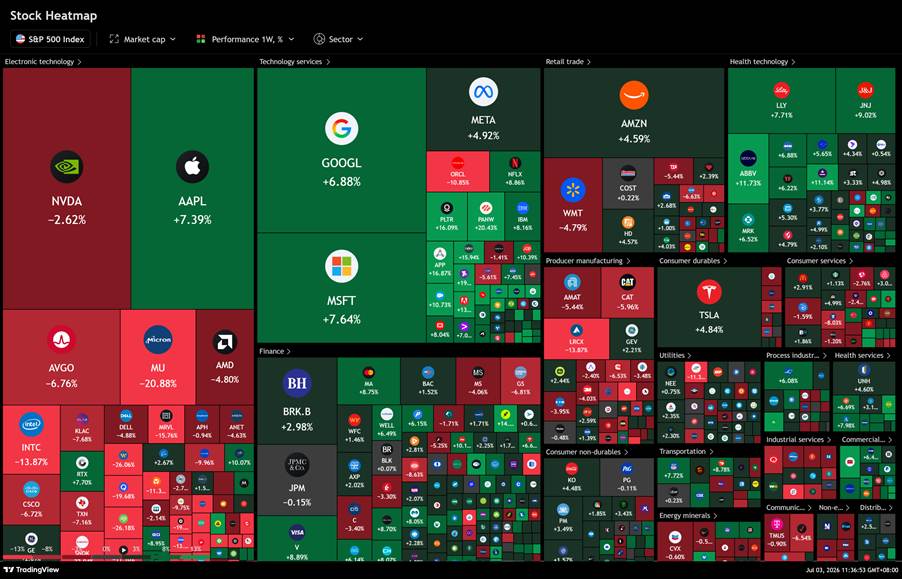
The mistake is that while I may have been right on the direction of the trade, I was wrong on timing.
So I was holding a bunch of positions that were essentially flat for 6 months, when I could have been in positions that were up 200% or more.
In some ways, this is an extension of mistake (1).
Not sizing positions bigger during March / April’s Iran war
In hindsight, I was right on some of the calls I made in March.
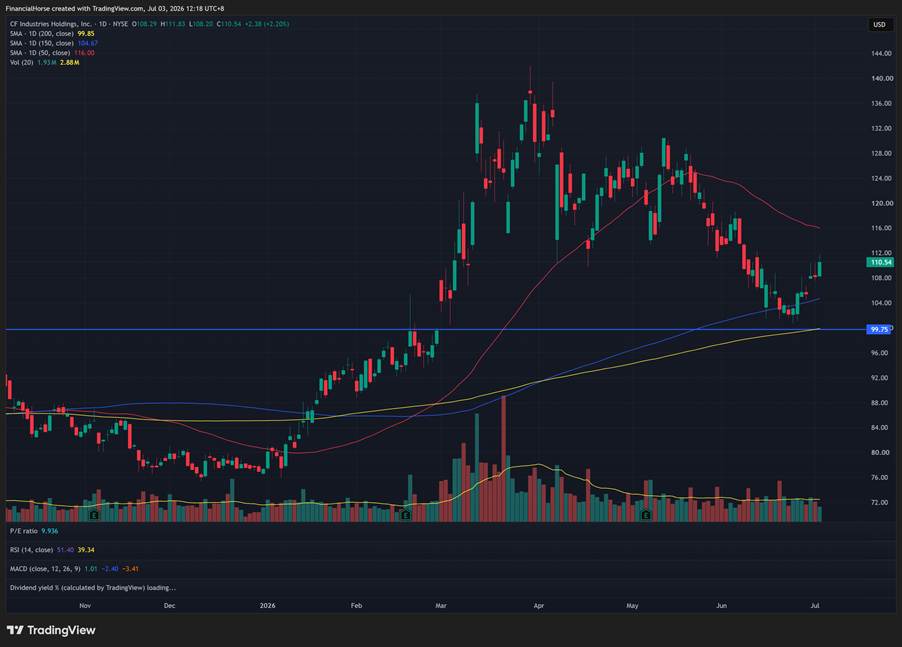
I bought a basket of oil, fertiliser and chemical stocks on the first few days of the Iran war.
Those delivered anywhere from a 20-30% return, which for a month’s trade wasn’t too bad.
The mistake I made was that those positions were sized too small.
So yes, I made money on these trades, but had I sized the positions larger, I would have made a lot more money.
On reflection, I myself was terrified in March 2026, because with a trade like that you just need Trump to tweet a peace deal and you could be looking at a 10% loss overnight.
So there are 2 sides to the picture here.
Size the trade bigger and make more if you are right, but lose more if you are wrong.
With the benefit of hindsight, I think I could have sized the trade somewhat larger than I did, to strike a better balance between risk and reward.
I probably erred too far on the side of caution on this one.
Which somewhat ties into my personal bias – where I am a naturally cautious investor by default.
So a lot of my trading rules are set up to encourage myself to take on more risk and size trades bigger – simply because I am conservative by default.
But that’s just what works for me, and if you’re one of those who take on too much risk by default, your rules should be configured to hold you back.
There’s no one size fits all here.
Never miss a post! Follow Financial Horse by subscribing or following us on your favorite platform:
Subscribe to our mailing list for exclusive content straight to your inbox:
What did I do right in 2026 so far?
So that’s what I did wrong.
On the flipside, what did I do right?
I like to focus more on my mistakes rather than wins (I don’t like to blow my own trumpet), so I won’t spend too much time here.
- Recognising I was wrong – buying back my AI stocks
- Buying heavily in March / April
- Holding a diversified portfolio
Recognising I was wrong – buying back my AI stocks
As shared above, I learned from my mistake with selling NVIDIA too early.
So this time when I recognised I made the same mistake with Micron, I swallowed my pride and bought the position back at almost double where I sold it.
The only regret is that had I realised the mistake earlier, I would have bought the position back earlier and at a better price, and I might even have sized it bigger.
A big learning point is that markets move incredibly quick these days.
What took weeks to play out in the past, today plays out in a day or two.
So if you recognise you made a mistake, be decisive, and act fast.
Buying heavily in March / April
I also made the right call to buy stocks heavily in March and April, especially after the Iran ceasefire was announced in early April.
Yes, I did make some mistakes as shared above on buying certain value stocks which were flat, when that money could have gone into AI stocks that doubled.
But there’s always 2 sides to the coin, and had AI stocks crashed I would be thankful that I was holding onto those value stocks.
Sometimes in investing, and in life, 80% of the work is just showing up.
By buying stocks heavily on the Iran ceasefire news, I made sure I got into the game, and got exposure to the subsequent rally.
That’s what matters.
Holding a diversified portfolio
This one is both a pro and a con.
FH Premium subscribers know that I run a fairly diversified portfolio that runs across US, Europe, China and Singapore. And I hold a mix of tech stocks, value stocks, bank stocks, gold, bonds etc.
That diversification held back my returns when AI went on a parabolic run in Q2 2026.
But on the flipside it also protects me if the AI bubble deflates.
From a big-picture perspective, I am comfortable with the diversified portfolio, as it protects me on the downside if I am wrong.
It’s about getting the asset allocation to strike the right balance between risk and reward, which is of course a never ending journey of improvement.
Game plan for the second half of 2026
But like I said, I see this as a half-time pep talk.
We’re only halfway through the year, which means another 6 months of returns to go.
There’s a famous piece of advice from Stanley Druckenmiller – if you’re up 20% for the year in the first half, you should floor it and go for 40%.
The logic is that once you are already up 20%, you have earned a risk cushion.
And because winners trend, if you are up handsomely for the year, chances are you are doing something right – and that will continue to pay off as the year plays out.
The flipside, of course, is that Druckenmiller also cautions to act decisively and change your mind quickly when facts change.
Typical for these guys – always a rule, then a big exception.
Now no doubt that the biggest winner in 1H 2026 was AI.
The big question is whether that continues in 2H 2026, or whether AI gives up most of its gains.
I’m up 100-200% on certain AI positions, if those end the year flat and I never took profit, I am going to be absolutely kicking myself.
And from what I’m seeing so far in July, the initial signs are not pretty.
And on the flip side, if you take out AI stocks, I’ve shared on FH Premium that there are plenty of value stocks and REITs that look great value here – even on the SGX, and which have been breaking out of late. So there is plenty of opportunity there even outside of the AI trade.
So yes, I’ll try and gun for big returns in 2H 2026.
But I’m also very cautious that the whole AI -> value rotation may be already playing out as we speak, so I will adapt accordingly, and all portfolio changes are shared on FH Premium.
But that’s just a snapshot view of how I’m seeing it as of today, and as Druckenmiller says – when the facts change, change your mind.
Note that this article will not be updated going forward.
My latest macro views, including changes I make to my personal portfolio, are shared on FH Premium.
congrats
To be fair I don’t think the results are amazing, it could have well been in the 20-30% range had I not sold AI so early.
Crypto would give up its kidney to have +20%
And also your gains in semis are realised so there’s no shame in that; it’s all gotta be realised
That’s fair. That said I compete against the opportunity set. Given the opportunity set in the first half of the year, and give the positions I were holding, I felt I could have easily hit 20-30% returns.
I like the honesty here. Sharing mistakes is often more valuable than only talking about successful investments.
Agree, always find there is more to learn from mistakes than successes.