Most Singaporeans think about healthcare planning only when insurance premiums go up.
But the bigger issue is not just hospital bills.
A serious illness can also mean lost income, rehab costs, caregiver costs, helper costs, and the need for cash before insurance claims or subsidies are settled.
The big health risks in Singapore are fairly clear. Based on MOH’s 2024 death data, the top causes of death were cancer, pneumonia, ischaemic heart disease, stroke, and hypertensive diseases.
So the practical question is:
What are the biggest health risks in Singapore, and how should Singaporeans prepare financially?

This article was written by a Financial Horse Contributor.
1. Cancer
Cancer is Singapore’s No. 1 cause of death, accounting for 26.5% of deaths in 2024.
Financially, cancer is dangerous because the cost is not limited to the hospital bill.
There may be surgery, chemotherapy, radiotherapy, targeted therapy, immunotherapy, second opinions, time off work, transport, helper support, and long follow-up care.
What to do
The highest-ROI move is early detection.
Use subsidised national screening where eligible:
- Colorectal cancer screening
- Breast cancer screening
- Cervical cancer screening
- Follow-up screening based on family history and doctor advice
Healthier SG Screening makes some screening very cheap for eligible Singapore Citizens. For example, selected screenings can cost $0 to $5 depending on eligibility and subsidy tier.
Lifestyle still matters: don’t smoke, control weight, exercise, moderate alcohol, and consider HPV / hepatitis B vaccination where relevant.
Financial preparation
For cancer, prepare in three layers:
- Hospital insurance — MediShield Life is the base layer, but mainly sized for subsidised public hospital care. If you want A/B1 or private hospital optionality, review your Integrated Shield Plan.
- Cancer drug coverage — check how your plan treats Cancer Drug List claims and non-CDL drugs.
- Critical illness cover — this pays cash to you, not the hospital. It helps with income loss and recovery expenses.
A simple rule:
Critical illness cover = 2–3 years of household expenses + 1 year of debt servicing + recovery buffer − liquid assets you are willing to spend.
2. Heart Disease and Stroke
Heart disease and stroke are major killers and major disability risks.
In 2024, ischaemic heart disease accounted for 19.6% of deaths, stroke 5.6%, and hypertensive diseases 3.2%.
The problem is that many risk factors are silent. High blood pressure, high cholesterol, and early diabetes usually do not feel like anything.
What to do
Check and control:
- Blood pressure
- LDL cholesterol
- Blood sugar / HbA1c
- Weight and waist size
- Smoking
- Exercise
- Sleep
The biggest mistake is waiting for symptoms.
By the time symptoms appear, you may already be dealing with heart disease or stroke risk.
Aim for:
- 150–300 minutes of moderate cardio weekly
- 2 strength sessions weekly
- Regular health screening
- Early treatment for high blood pressure, cholesterol or diabetes
Financial preparation
Heart attack and stroke planning is not just about hospital bills.
A stroke can create long-term costs: rehab, home modifications, mobility aids, helper cost, and caregiver income loss.
Prepare with:
- Hospitalisation insurance
- Critical illness cover
- Emergency fund
- Disability / long-term care cover
- Rehab and caregiver cash buffer
This is where many families are underprepared. The hospital bill may be covered, but the post-discharge costs can still be painful.

3. Diabetes, Hypertension, High Cholesterol and Obesity
Metabolic disease is the risk multiplier.
Diabetes, high blood pressure, high cholesterol and obesity increase the risk of heart disease, stroke, kidney disease, eye disease, nerve damage and infection complications.
The financial damage is gradual but serious. It creates recurring cost and makes future illnesses worse.
What to do
The practical moves are simple:
- Cut sugary drinks
- Reduce refined carbs
- Eat more protein and fibre
- Walk after meals
- Strength train
- Track waist size
- Sleep properly
- Monitor blood pressure
- Do regular blood tests
- Treat abnormal results early
You do not need to become a fitness influencer.
For many people, losing 5–10% of body weight, walking more, lifting weights twice a week, and treating high BP / LDL / glucose early can make a big difference.
Government help
This is where Healthier SG is useful.
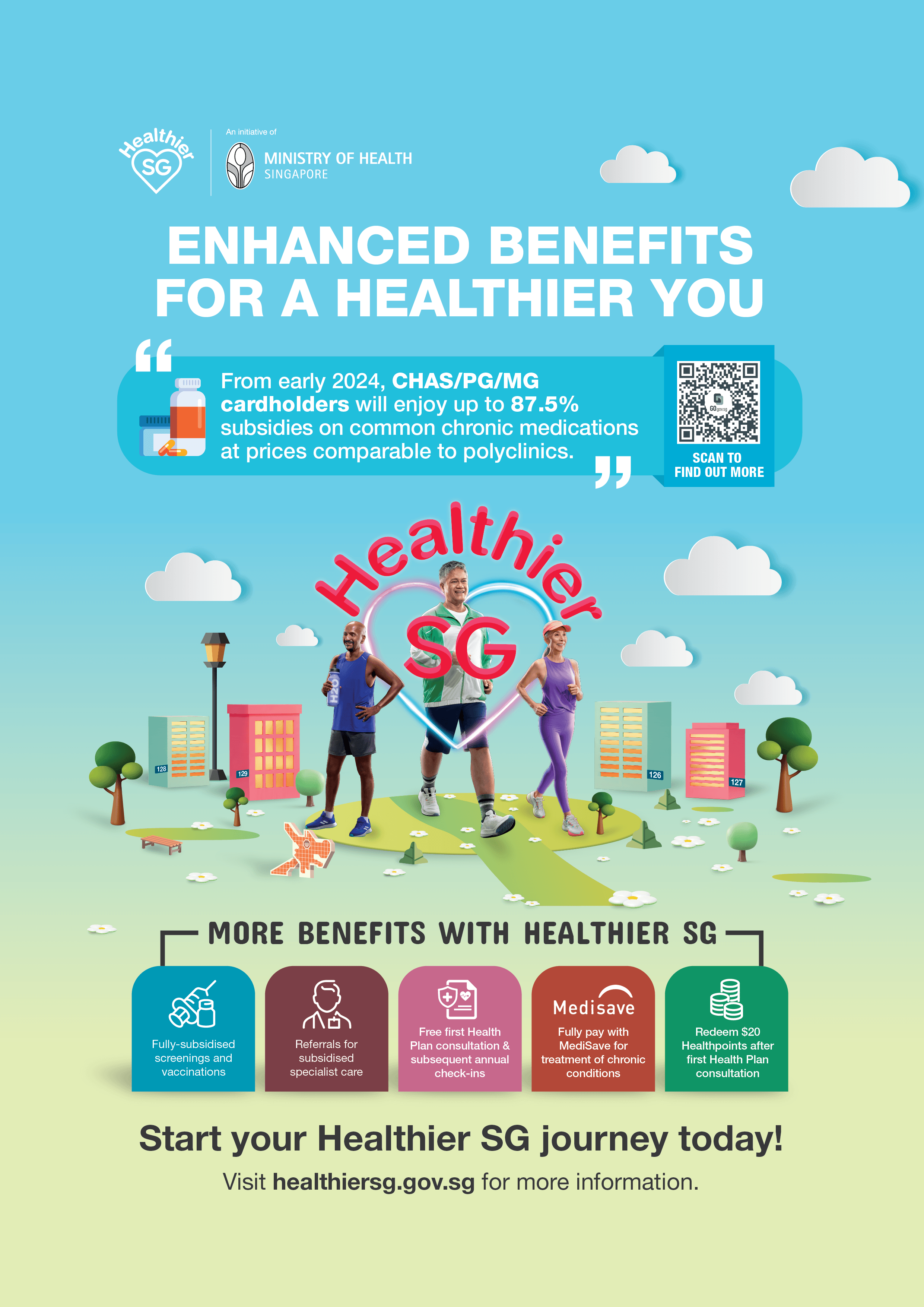
Healthier SG helps Singaporeans anchor care with a family doctor and provides access to subsidised screening, vaccinations, and chronic disease management.
CHAS, Pioneer Generation and Merdeka Generation subsidies may also help reduce chronic medication and consultation costs.
MediSave can also be used for approved chronic conditions under MediSave500/700. From 2027, the annual limits will increase under the renamed MediSave Chronic and Preventive Care scheme.
Financial preparation
Metabolic disease is less about one giant bill and more about recurring drag.
Budget for:
- GP visits
- Blood tests
- Chronic medication
- Follow-up reviews
- Lifestyle spending, such as exercise and healthier food
Also, review your insurance while you are still healthy.
Once diabetes, hypertension or heart disease appears, future insurance underwriting becomes harder.
4. Pneumonia and Respiratory Infection
Pneumonia was Singapore’s No. 2 cause of death in 2024, accounting for 23.0% of deaths.
This surprises many people.
But pneumonia is often not just a simple infection. In older adults, it can be the final event after frailty, stroke, dementia, cancer, diabetes, chronic lung disease or poor mobility.
So the real issue is not just “avoid getting a cough”.
It is:
How do we reduce serious infection risk as we age?
What to do
Key moves:
- Annual flu vaccination where recommended
- Pneumococcal vaccination where recommended
- Stop smoking
- Manage diabetes and lung disease
- Maintain muscle mass
- Prevent frailty
- Seek early treatment for older family members with serious symptoms
Vaccination is especially important for older adults and those with chronic disease.
Government help
Eligible Singaporeans can receive subsidised vaccinations under Healthier SG and the National Adult Immunisation Schedule.
MediSave can also be used for selected recommended vaccinations, including influenza and pneumococcal vaccines for eligible groups.
Financial preparation
For younger healthy adults, pneumonia may not be the main financial risk.
For elderly parents, it matters a lot.
Ask:
- Do they have MediShield Life / IP?
- Are they using subsidised public care or private care?
- Is there enough MediSave?
- Who pays for helper or home care after discharge?
- Are vaccinations up to date?
- Is the home safe for recovery?
For ageing parents, also prepare the non-financial paperwork:
- LPA
- Will
- CPF nomination
- Care preferences
- Medical documents
This reduces stress when a health crisis happens.
5. Mental Health and Long-Term Disability
Mental health is not one of the top causes of death, but it is a major financial and quality-of-life risk.
Poor mental health affects work, relationships, sleep, productivity, and decision-making.
Long-term disability is even more financially dangerous. The family may lose income while expenses rise.
What to do
For mental health:
- Protect sleep
- Exercise regularly
- Maintain social support
- Seek help early
- Use employer or public resources before things worsen
- Reduce chronic overload where possible
For disability prevention:
- Prevent stroke
- Control diabetes
- Maintain muscle
- Prevent falls
- Treat osteoporosis
- Keep active as you age
Government help
CareShield Life provides monthly payouts if you become severely disabled.
The payout helps, but it is not enough to fully cover helper cost, nursing care, rehab, transport, diapers, medical equipment, home modifications and caregiver income loss.
Other support schemes include Home Caregiving Grant, ElderFund and related long-term care subsidies, depending on eligibility.
Financial preparation
Think in layers:
- Keep CareShield Life.
- Consider CareShield supplements if you want higher disability payout.
- Build an eldercare fund for parents.
- Keep emergency cash.
- Discuss care preferences early.
- Organise key documents before crisis hits.
Long-term care is not just a medical issue.
It is a family balance sheet issue.
The Singapore Healthcare Money Stack
A proper health financial plan has five layers.
1. Prevention and screening
Use Healthier SG Screening, subsidised vaccinations, CHAS, and regular GP follow-up.
This is the cheapest and highest-return layer.
2. MediShield Life
MediShield Life is the national base layer. It helps with large hospital bills and selected costly outpatient treatments.
But it is mainly sized for subsidised public hospital care.
3. Integrated Shield Plan
An IP gives you more hospital-class choice.
But do not blindly buy the highest plan.
Ask whether you can still afford the premiums at 60, 70 and 80.
4. Critical illness cover
CI cover pays cash to you.
It is useful for income loss, mortgage payments, family expenses, and recovery flexibility.
It is not the same as hospital insurance.
5. Long-term care and cash buffer
Even if insured, you still need cash for:
- Deductibles
- Co-payments
- Rehab
- Helper costs
- Transport
- Home care
- Caregiver support
From 2026, new IP rider rules also mean Singaporeans should pay more attention to deductibles and co-payments.
Insurance helps, but cashflow still matters.
Bottom Line
The 5 biggest health risks in Singapore are:
- Cancer
- Heart disease and stroke
- Diabetes, hypertension, high cholesterol and obesity
- Pneumonia and respiratory infection
- Mental health and long-term disability
The answer is not simply to buy more insurance.
The better strategy is:
- Use subsidised screening and vaccinations.
- Treat silent chronic risks early.
- Match your hospital insurance to your actual care preference.
- Buy CI cover for income disruption, not hospital bills.
- Prepare cash for deductibles, co-payments, rehab and caregiver costs.
- Plan for disability before your family is forced to improvise.
The highest-return healthcare investment is prevention.
Health is wealth!
If you are in your 20s or 30s
Your biggest advantage is insurability.
Do this before health conditions appear:
- Buy appropriate hospital cover.
- Consider term life if dependants exist.
- Consider CI if your income supports others.
- Build an emergency fund.
- Start regular screening once eligible.
- Fix diet, sleep and exercise habits early.
The mistake: thinking youth means no risk.
The better view: youth is when insurance is easiest to get and habits are easiest to compound.
If you are in your 40s or 50s
This is the danger zone.
Career income is high, family liabilities may be high, and chronic disease risk starts showing up.
Do this:
- Check BP, LDL, HbA1c, kidney function and waist size.
- Use Healthier SG Screening.
- Review IP affordability into retirement.
- Check CI cover against mortgage and family expenses.
- Build retirement healthcare cash buffer.
- Take weight, sleep and strength training seriously.
The mistake: assuming “I feel fine” means “I am fine”.
If you are in your 60s and above
The focus shifts.
Now the issue is less about maximum insurance and more about sustainable care.
Do this:
- Decide public vs private care preference.
- Review whether IP premiums are still worth it.
- Use vaccinations.
- Use Healthier SG and CHAS.
- Keep CareShield Life.
- Consider long-term care supplements.
- Prepare LPA, CPF nomination, will and care instructions.
- Reduce fall risk at home.
The mistake: paying for insurance that no longer matches the likely care pathway.